Cartoons Didn't Get Simpler — You Just Stopped Paying Attention
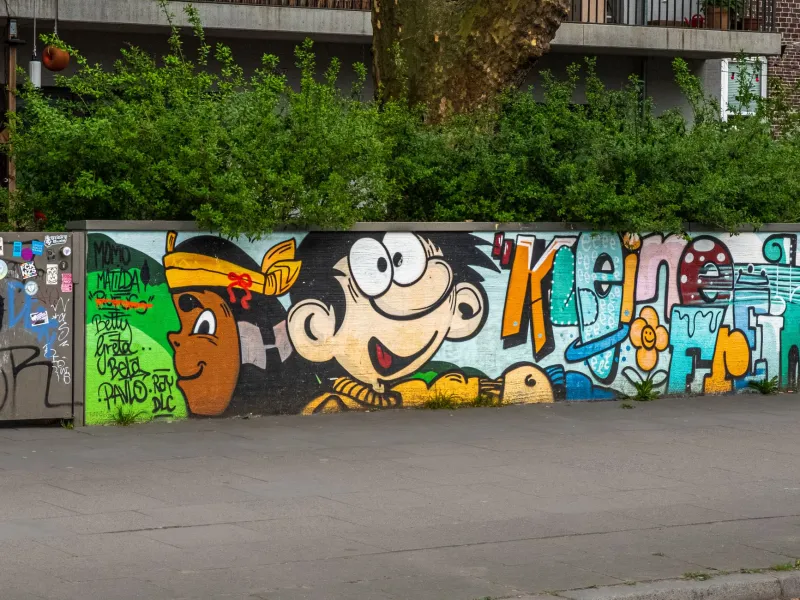
Cartoons Didn't Get Simpler — You Just Stopped Paying Attention
Let's set the scene. You're at a dinner party — or a Discord call, we don't judge — and someone asks what you've been watching. You say Scavengers Reign or The Midnight Gospel or Infinity Train, and there's a pause. A very specific pause. The kind that says: "Oh, you watch... cartoons?"
And here's the thing. Yes. Yes, you do. And you are winning.
Because while a significant portion of the TV-watching population has been convinced that animation is either for children or for ironic adult humor that peaks at fart jokes, a genuinely extraordinary generation of animated storytelling has been quietly unfolding on streaming platforms, YouTube channels, and indie corners of the internet. These shows are doing things with grief, identity, neurodivergence, surrealism, and joy that most live-action prestige television — with its $200 million budgets and Very Serious Cinematography — hasn't come close to touching.
This is your official invitation to pay attention.
The Bias We Need to Acknowledge
Western culture has a complicated relationship with animation. We tend to treat it as a delivery mechanism for children's content, then act surprised when something like Arcane or Over the Garden Wall makes grown adults absolutely fall apart emotionally. Meanwhile, in Japan, animation has been taken seriously as an art form for decades — a fact that American audiences are only now reckoning with on a wide scale thanks to the global explosion of anime.
But the bias runs deep. Animation gets filed under "not serious" almost by default, which means genuinely boundary-pushing work gets overlooked or dismissed before anyone gives it a real chance. Shows get cancelled too soon. Conversations don't happen. And meanwhile, something extraordinary is sitting right there on your streaming queue, labeled as a cartoon, waiting for you to stop being a snob about the medium.
Scavengers Reign: The One That Broke People
If you haven't seen Scavengers Reign yet, we need you to stop reading this article immediately, go watch it, come back, and then we can talk.
Back? Good. Are you okay? No? Same.
Max's 2023 animated series — technically sci-fi, spiritually something else entirely — follows the survivors of a crashed spaceship as they try to survive on an alien planet of extraordinary, terrifying beauty. The animation style is unlike anything else on American television: lush, strange, almost botanical in its detail. But what makes the show genuinely remarkable isn't just how it looks. It's how it thinks about consciousness, symbiosis, trauma, and the line between surviving and living.
It was cancelled after one season. The internet was not okay about it.
The Midnight Gospel: A Podcast Inside a Cartoon Inside an Existential Crisis
Pendleton Ward — the creator of Adventure Time — teamed up with podcaster Duncan Trussell to make something that is extremely difficult to describe at a dinner party but extremely easy to feel in your chest.
The Midnight Gospel is, on the surface, a show about a guy with a "multiverse simulator" who travels to dying worlds to record podcast interviews. In practice, it's a series of real conversations about death, addiction, mindfulness, and meaning, playing out over the most psychedelic, kaleidoscopic animation you've ever seen. The final episode — a conversation between Trussell and his late mother about dying — is one of the most affecting pieces of television made in the last decade. Full stop. Medium irrelevant.
People cried in ways they weren't prepared for. That's not a cartoon thing. That's just great storytelling.
Infinity Train: The One That Understood Kids Were Smarter Than We Thought
Infinity Train, which aired on Cartoon Network and HBO Max before its deeply controversial cancellation, follows passengers on a mysterious train with infinite cars, each containing its own world, and a number on their hand that goes up or down depending on their emotional growth.
That premise alone is doing more interesting work with the concept of internal change than most self-help books. Creator Owen Dennis used the show to explore grief, codependency, trauma cycles, and identity across four seasons, each with a different protagonist. Season two is arguably one of the most sophisticated explorations of an emotionally stunted adult character in any medium. It's also technically a kids' show. The kids were fine. The adults were wrecked.
The Indie Web Cartoon Underground
Not everything groundbreaking is on a major streaming platform. On YouTube and Newgrounds and various corners of the internet, a thriving ecosystem of indie animated creators is doing work that the algorithm has no idea what to do with but that genuinely deserves your attention.
Creators like Worthikids (Bigtop Burger), who builds entire fictional worlds with surprisingly emotional cores, or the absurdist universe of Helluva Boss, which started as an indie web project and grew into something with genuine character depth and a fanbase that would die for it. These aren't polished Netflix productions. They're passion projects made by small teams with enormous creative ambition, and they carry an energy that's almost impossible to manufacture at scale.
Why Animation Hits Differently for Neurodivergent Viewers
Here's something worth sitting with: animation, specifically its ability to externalize internal states visually, makes it uniquely powerful for storytelling about neurodivergent experiences. When a character's anxiety manifests as a literal monster in a surreal animated space, that's not just a visual metaphor — it's a form of representation that live-action struggles to replicate without feeling heavy-handed.
Shows like Kipo and the Age of Wonderbeasts, Amphibia, and The Owl House have built devoted followings among LGBTQ+ and neurodivergent viewers precisely because animation gave their creators the visual language to tell those stories with nuance and imagination. The format isn't a limitation. It's a feature.
The Part Where We Make the Case
Look, nobody is saying every animated show is a masterpiece. For every Scavengers Reign, there are a hundred shows that are genuinely just vibes and noise. The same is true of live-action television.
But the idea that animation is inherently less capable of complex, meaningful storytelling is not only wrong — it's increasingly embarrassing to hold. The medium is doing some of the most inventive visual work, the most emotionally honest character writing, and the most formally experimental storytelling happening anywhere on screens right now.
You don't have to defend your taste to anyone. But maybe the next time someone gives you that pause at the dinner party, you hand them a list and tell them to report back in a week.
They'll come back different. They always do.