Ugly Never Looked So Good: How Imperfect, Awkward, and Gloriously Weird Became the Hottest Aesthetic in America
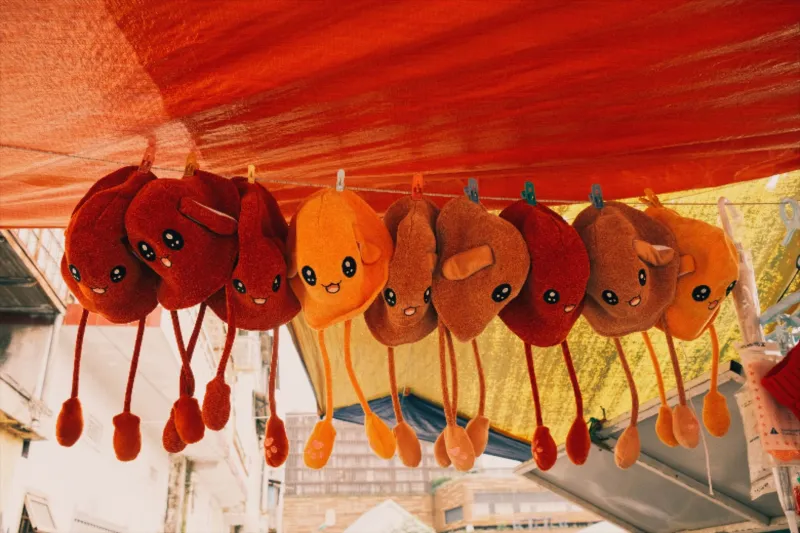
Somewhere between a lumpy frog Squishmallow and a tattoo of a badly drawn birthday cake, something quietly revolutionary happened. Americans — particularly younger ones — stopped chasing perfection and started actively hunting for its opposite. Not broken things. Not lazy things. But things that are deliberately, joyfully, unapologetically a little off.
Welcome to the Ugly Cute era. Population: everyone who's ever felt more at home in a thrift store than a gallery.
What Even Is Ugly Cute?
Ugly cute — sometimes called "uguukawaiku" in Japanese design circles, though America has thoroughly claimed it as its own chaotic child — is the aesthetic of things that shouldn't work but absolutely do. Think of a stuffed animal with eyes that are just slightly too far apart. A cartoon character whose proportions make zero anatomical sense. A video game with intentionally clunky pixel art that looks like it was made on a 1998 school computer — and does so on purpose.
The key word here is intentional. Ugly cute isn't accidental bad design. It's design that winks at you. It says: I know exactly what I am, and I chose this. That knowing quality is what separates a Squishmallow from a sad, deflated dollar store stuffed animal. One has soul. The other just has regrets.
And Americans, especially Gen Z and younger millennials, are absolutely feral for it.
The Squishmallow Situation
Let's start with the obvious mascots of this movement. Squishmallows — those round, marshmallowy plush creatures with tiny limbs and enormous, slightly vacant eyes — became a full-blown cultural phenomenon that nobody in a boardroom saw coming. These things are not conventionally cute. They're more like if a throw pillow had an existential crisis and decided to become a character. And yet, by 2022, Squishmallows had outsold Barbie.
What's the appeal? Part of it is tactile — they're incredibly soft and satisfying to squish (hence, you know, the name). But a huge part is that they look weird. They look like something a child drew and a factory somehow manifested. There's a warmth in that imprecision. A Squishmallow doesn't judge you. It can't. It has the facial expression of a creature that has accepted the universe entirely.
In a content landscape stuffed with hyper-rendered CGI mascots and algorithmically optimized brand characters, the Squishmallow's lumpy sincerity hits different.
Tattoo Culture's Janky New Darling
Meanwhile, over in tattoo studios across the country, a style called "bad tattoo" or "trash polka lite" — though most people just call it "funny little guy" energy — is booking out artists for months. We're talking deliberately wobbly linework, clip-art-style imagery, cartoon frogs with googly eyes, and birthday cakes that look like they were drawn by a very confident six-year-old.
This is permanent. On bodies. On purpose.
And it's not because people couldn't find a technically skilled tattoo artist. It's because they specifically sought out artists who could make something that looked charmingly, endearingly imperfect. Artists like those in the "ignorant style" tattoo movement — a European-born trend that's fully taken root in American studios — have waitlists that would make a fine-dining restaurant jealous.
The psychology here is fascinating. Getting a "perfect" tattoo used to be the whole point. Now, getting something that looks like your friend doodled on you in study hall? That's the flex. It signals confidence, humor, and a total lack of pretension. It says: I don't take myself so seriously that I need my skin to be a museum.
Indie Games and the Beauty of Jank
Digital culture has its own ugly cute economy, and it lives largely in the indie game space. Games like Untitled Goose Game, Bugsnax, Kindergarten, and a dozen others that exploded on platforms like itch.io embrace deliberately weird, sometimes visually "off" aesthetics as a core part of their identity. The characters are strange. The proportions are wrong. The color palettes feel like someone raided a 1990s clip art CD.
And players love them, often more than technically polished AAA titles that cost forty times more to produce.
Part of this is nostalgia — early gaming was janky by necessity, and that jank became part of the charm. But the modern version isn't just nostalgia bait. It's a conscious aesthetic choice that communicates something: this was made by a person, not a corporation. The imperfection is proof of humanity. In an era when AI-generated images are becoming indistinguishable from photographs and every major studio game looks like a movie, a little jank is basically a certificate of authenticity.
Fashion's Weird Little Moment
Fashion, never one to sit out a cultural conversation, has fully embraced the ugly cute wave too. Crocs — famously, legendarily ugly — became the shoe of the decade. Chunky "dad sneakers" went from punchline to essential. Brands like Lazy Oaf built entire identities around intentionally childish, slightly absurd graphics: ice cream cones with sad faces, cartoon dogs in inexplicable situations, colors that clash in ways that feel almost aggressive.
Even high fashion got the memo. Balenciaga's deliberately "broken" aesthetic, Margiela's deconstructed weirdness, and the broader "ugly fashion" moment of the late 2010s all pointed toward the same cultural hunger: people want to wear things that feel real, not aspirational. Things that feel like a personality, not a mood board.
When you wear a sweatshirt with a poorly drawn cat on it, you're not trying to impress anyone. And somehow, that's exactly what makes it impressive.
Why Now? The Psychology of Choosing Weird
Here's the real question: why is ugly cute having its massive moment right now?
The short answer is that we're exhausted. Social media spent the better part of a decade training us to consume — and produce — content that is perfectly lit, perfectly filtered, and perfectly curated. Instagram turned our lives into catalogs. Pinterest turned our homes into mood boards. TikTok gave us fifteen seconds to be interesting, and the pressure to be polished was immense.
Ugly cute is the exhale.
When you choose the lumpy frog over the sleek brand mascot, you're opting out of the performance of perfection. You're saying: I know the game, and I'm choosing not to play it. That's not laziness — that's a genuine aesthetic and philosophical stance. Ugly cute is anti-aspirational in the best possible way. It doesn't want your approval. It just wants to exist and maybe make you smile with its slightly cross-eyed little face.
There's also something deeply democratic about it. Ugly cute aesthetics are accessible. You don't need a design degree or an expensive camera or a Pinterest-perfect apartment. You need a sharpie, a weird idea, and zero fear of being told something "doesn't look right." That accessibility is radical in its own quiet way.
The Ugly Truth (It's Actually Beautiful)
Ugly cute isn't a trend waiting to peak and collapse. It's a symptom of something deeper — a genuine cultural shift in what Americans find meaningful, comforting, and worth celebrating. The things we're drawn to increasingly reflect a desire for honesty over polish, personality over perfection, and genuine weirdness over manufactured charm.
The Squishmallow, the janky tattoo, the indie game with the slightly broken hitbox — they're all making the same argument: imperfection is human, and human is good.
And honestly? In a world that keeps trying to sand down every rough edge, choosing the lumpy, the awkward, and the gloriously weird feels less like a quirky preference and more like a small act of rebellion.
Long live the ugly cute. May its eyes always be slightly too far apart.