One Is Never Enough: The Gloriously Unhinged Psychology of Collecting Absolutely Everything
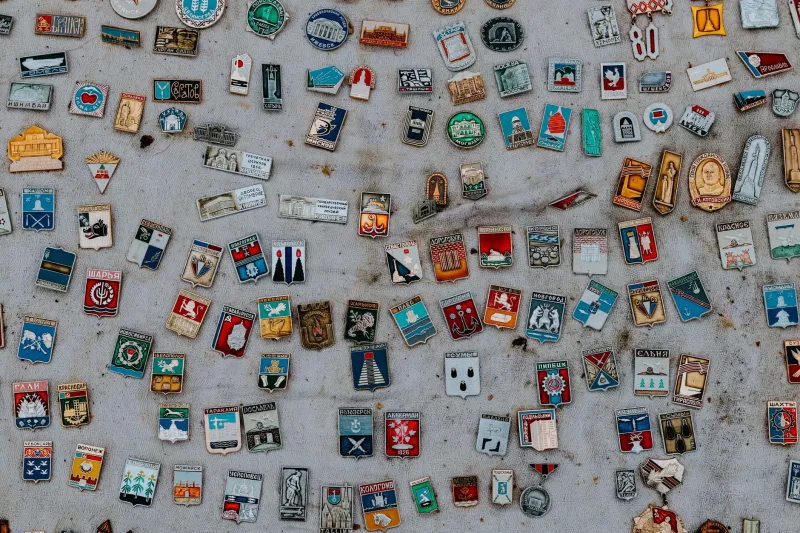
It started with one enamel pin. A tiny, shiny little mushroom with googly eyes that you spotted at a craft fair between a candle that smelled like "forest nap" and a tote bag that said something vaguely threatening. You bought it. You pinned it to your jacket. You felt a feeling.
Fast forward six months: you have forty-seven pins, a dedicated display board, a spreadsheet (yes, a spreadsheet), and a mild obsession with a seller in Portland who makes pins shaped like obscure 1970s appliances. You are, by all measurable standards, a collector now. Congratulations. There is no going back.
But here's the thing nobody tells you — that feeling you chased after pin number one? It's not random. It's not silly. It's not even that weird. It is, according to actual scientists and psychologists who study this stuff, deeply, profoundly human.
Your Brain Is Running a Very Old Program
Let's get a little nerdy for a second, because the science here is genuinely fascinating. Collecting behavior activates the brain's dopamine reward system — the same system responsible for the satisfaction you get from completing a task, eating a really good taco, or finally finding the remote that's been under the couch cushion for three weeks.
When you acquire an item that fits your collection, your brain releases a small but very satisfying hit of dopamine. When you almost complete a set — when there's one piece missing — your brain enters a mild but persistent state of tension that psychologists sometimes call "the Zeigarnik effect." Basically, your brain hates unfinished things. It will quietly obsess over them until they are done. Which is why you will, at 2 AM, be searching eBay for a specific variant of a Sanrio character that was only released in Japan in 2019 and costs $34 plus shipping.
This isn't weakness. This is neuroscience. You're basically a very cute lab rat in a very aesthetic maze.
Curation Is Control (And Control Is Everything Right Now)
Here's where it gets a little more emotionally resonant, so bear with us. Gen Z has come of age during a truly spectacular parade of chaos — a pandemic, economic instability, a housing market that looks like a fever dream, and a news cycle that never, ever stops being a lot. The world, frankly, does not feel particularly manageable.
But your collection of 1990s Lisa Frank stickers? That you can manage. That you can sort, display, categorize, and control with absolute precision. Every piece you add is a decision you made. Every arrangement is yours. In a world that constantly reminds you how little agency you have over the big stuff, a carefully curated shelf of vintage My Little Pony figures is a small, glittering kingdom of your own design.
This is what psychologists sometimes call "compensatory control" — the very human tendency to seek order in small, personal domains when the larger world feels overwhelming. Collectors aren't escaping reality. They're building a tiny, manageable version of it that actually makes sense.
The Taxonomy of the Obsessed
Not all collectors are created equal, and the what you collect says something genuinely interesting about the why behind it. Broadly speaking, the Gen Z collector universe breaks down into a few glorious archetypes:
The Completionist — Must have every variant. Every colorway. Every limited edition. Will not rest until the set is whole. The spreadsheet is extensive. The storage solutions are impressive. The mild anxiety when a new variant drops is very real.
The Aesthetic Archivist — Less concerned with completeness, more concerned with vibe. This person collects things that look like they belong together — a very specific shade of sage green, a particular era of illustration style, objects that feel like they all came from the same dream. Their collection is basically a three-dimensional mood board.
The Emotional Hoarder — Every piece has a story. This pin was from that concert. This sticker was in a package from an online friend. This tiny ceramic cat was found in a thrift store in a city they visited when they needed to get away from everything. The collection is a physical autobiography.
The Chaos Goblin — No theme. No rules. Just vibes and the inexplicable compulsion to own every weird little object that crosses their path. Somehow, it all works. Nobody understands how. Not even them.
The Community Is Kind of the Whole Point
Here's something the lone-collector narrative misses entirely: most obsessive collecting is intensely social. Trading pins at concerts. Swapping sticker sheets through the mail. Posting your haul on TikTok and watching strangers in the comments absolutely lose their minds because you found a specific Tokidoki figure they've been hunting for two years.
Collecting creates instant community. It gives you a language — a set of references, values, and enthusiasms — that immediately connects you to other people who share your particular flavor of obsession. In a social landscape where it can feel genuinely difficult to find your people, walking into a room and spotting someone with the same obscure pin on their jacket is basically a secret handshake. You just know.
This tribal dimension of collecting is especially powerful for Gen Z, a generation that has built so many of its deepest friendships online, across distances, through shared obsessions rather than shared geography. Your collection isn't just about the objects. It's about the invisible network of people who understand why those objects matter.
So Is It a Problem?
Honestly? Usually not. The line between a meaningful hobby and a genuinely disruptive compulsion is worth paying attention to — if collecting is creating financial strain, taking over your living space in ways that feel out of control, or filling an emotional void that probably needs a therapist more than another enamel pin, those are worth noticing.
But for most collectors, the accumulation is healthy, joyful, and genuinely creative. It's a practice of attention — learning to notice the things that make you feel something, and choosing to surround yourself with them. It's curation as self-knowledge. It's the long, ongoing project of figuring out who you are by assembling the physical evidence.
Your collection is, in its weird and wonderful way, a portrait of you.
So go ahead. Get the pin. You were always going to.