Corrupted on Purpose: The Glitchy, Grainy Visual Rebellion Taking Over Young America
Imagine you could take every photo ever posted to Instagram between 2015 and 2019 — the golden-hour smoothies, the impossibly symmetrical flat lays, the skin so retouched it looked like a painting of skin — and feed it into a machine that would make it look like it was recorded on a VHS tape someone left in a hot car for three summers.
That machine exists. It's called aesthetic intention. And Gen Z has been running it at full blast.
The lo-fi, glitched-out, deliberately degraded visual language that has consumed corners of TikTok, Tumblr resurrection culture, indie zines, and DIY digital art isn't a technical accident or a nostalgia trip for something people actually remember. It's a calculated, creative, deeply political middle finger to the idea that images are supposed to be perfect.
The VHS Tape as a Time Capsule of Imperfection
Let's get specific about what we're actually talking about. The VHS aesthetic — tracking lines, color bleeding, warped audio, that specific kind of chromatic aberration that makes everything look slightly haunted — is the cornerstone of what critics and creators alike have started calling damage aesthetics. It includes:
- Deliberately pixelated images treated to look like they were screenshotted seven times
- Photo filters that add grain, light leaks, and timestamp overlays from 1994
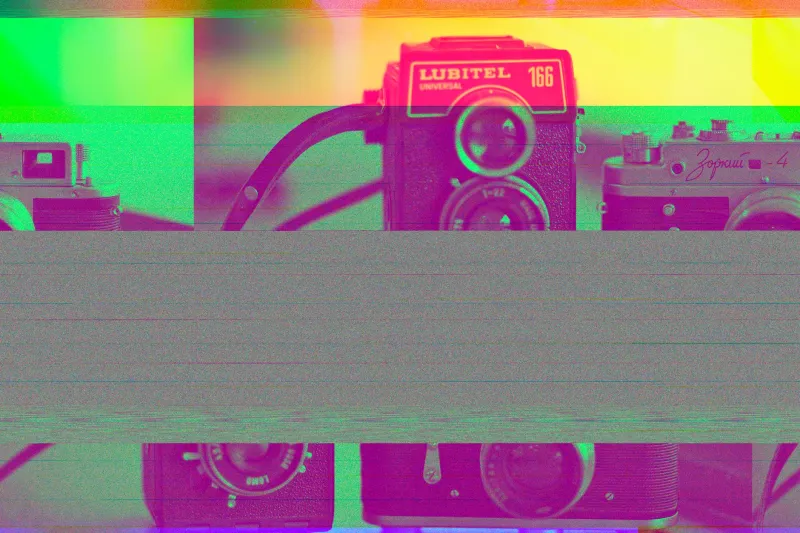
- Glitch art, where digital files are intentionally corrupted to create fragmented, psychedelic visual breakdowns
- Low-resolution memes where the compression artifacts are the entire point
- Camcorder footage shot in the present but processed to look like it was taped over a home movie from 1987
None of this is accidental. Every grain, every tracking error, every blown-out color is a choice. And the choice is saying something very specific: real is better than polished, and broken is more honest than pristine.
The Algorithm Made Them Do It
To understand why this happened, you have to understand what it was a reaction to.
The mid-2010s Instagram era created what cultural critics now call the algorithmic aesthetic — a homogenized visual language optimized for engagement metrics. High contrast but warm. Faces with smoothed pores and brightened eyes. Food that looks like it was styled by a NASA engineer. Rooms that appear to have been assembled by someone who has never actually lived in a room.
The algorithm rewarded visual conformity. Creators who chased the aesthetic got followers. Followers meant validation. Validation meant more chasing. The whole system was a loop that produced increasingly perfect, increasingly soulless content.
And then a bunch of 19-year-olds decided to burn it down with a VHS filter.
"There's something really suffocating about everything looking the same and looking good in the same way," says Devon, 23, a digital artist from Philadelphia who makes glitch art portraits. "When I started corrupting images on purpose, it felt like breathing again. Like, this is what something actually looks like when it's been lived in."
The degraded image is, in this reading, a more truthful image. The damage is the data.
Glitch Art and the Politics of Visual Noise
Glitch art has a longer history than its current TikTok moment suggests. Artists like Rosa Menkman and Cory Arcangel were exploring intentional digital corruption as early as the 2000s, arguing that the errors in digital systems revealed something true about the systems themselves — their fragility, their constructed nature, their tendency to fail in ways that are actually beautiful.
What's new is the democratization of this practice. Apps like Glitché, VSCO's grungier presets, and dozens of free tools let anyone corrupt an image in seconds. The aesthetic that once required technical knowledge and a certain art-world fluency is now available to anyone with a phone and a point to make.
And the point is being made constantly. Across Tumblr's ongoing revival, in lo-fi zines sold at craft fairs, in the deliberately terrible quality of certain viral videos that are terrible on purpose — the message is consistent: we reject your high-definition reality.
There's something genuinely radical about this. In an era where AI can generate photorealistic images of anything, choosing to make your images look worse is a power move. It says: I know what perfection looks like and I am actively refusing it.
The Nostalgia That Isn't Really Nostalgia
Here's the twist: most Gen Z creators who are obsessed with VHS aesthetics have no actual memory of VHS. They were born into DVD players and grew up on streaming. The grainy, tracked-out visual language they're chasing isn't a memory — it's a mythology.
What they're nostalgic for isn't a specific decade. It's a specific relationship to images — one where photographs and videos were scarce, impermanent, and deeply personal. Where the family camcorder footage was shaky and badly lit and completely irreplaceable. Where images weren't optimized for anyone's consumption but the people who made them.
The VHS aesthetic is a simulation of intimacy. A visual language that says: this wasn't made for you to approve of. This was made because something happened and someone wanted to remember it.
Kira, 20, from Nashville, puts it perfectly: "When I add a VHS effect to something, it feels like I'm saying this moment is mine. It's not for the algorithm. It's not for likes. It's just — mine. And the grain kind of protects it, weirdly."
The Beauty in the Breakdown
There's also just the purely visual argument, which shouldn't be undersold: this stuff looks incredible.
Glitch art, at its best, produces color combinations and compositional accidents that no intentional design process would ever generate. The corruption creates something genuinely new — a collaboration between the artist's intent and the machine's failure, producing results that are stranger and more interesting than either could produce alone.
Tracking errors create horizontal bands of color that function like abstract painting. Pixel compression artifacts turn faces into mosaics. Chromatic aberration splits single images into ghost-layered multiples that feel like something between photography and printmaking.
The damage is generative. The breakdown is the breakthrough.
What Comes Next
As with all aesthetic rebellions, the mainstream is already catching up. Major brands have started using lo-fi aesthetics in their campaigns, which is either the highest form of flattery or the fastest way to kill a movement, depending on who you ask.
But the underlying impulse — the rejection of algorithmic perfection, the embrace of visual honesty, the insistence that broken things can be beautiful — feels like something that won't disappear when the trend cycle moves on.
Because it's not really about VHS tapes. It never was. It's about the radical act of making something that looks like it was made by a person, in a specific moment, with all the mess and feeling that implies.
The glitch is the point. The grain is the truth. And the tracking error is the most honest line on the screen.