Dressed Like a Fever Dream and Proud of It: How Gen Z Turned the Thrift Store Into America's Wildest Art Studio
Dressed Like a Fever Dream and Proud of It: How Gen Z Turned the Thrift Store Into America's Wildest Art Studio
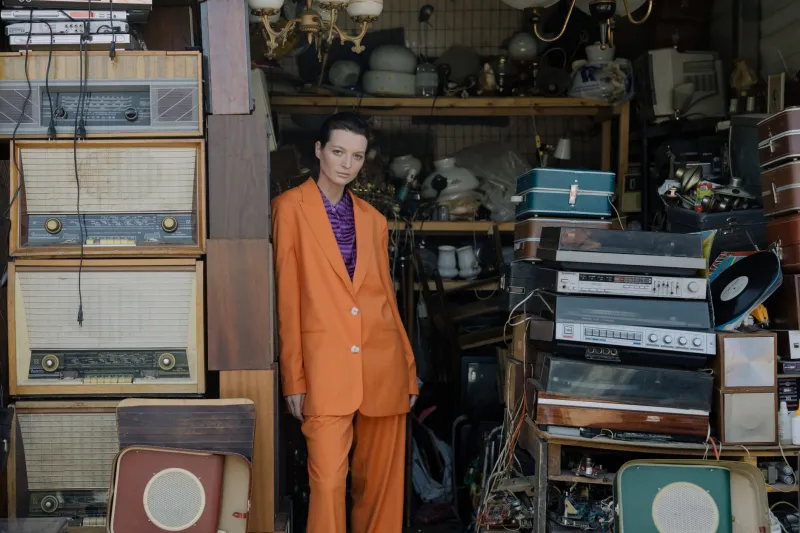
Let's paint a picture. It's a Tuesday afternoon at your local Goodwill. A nineteen-year-old is holding up a sequined vest from what appears to be a 1987 office holiday party, a pair of wide-leg trousers with a bold plaid that could stop traffic, and a belt with a buckle the size of a small country. She is not horrified. She is inspired. She buys all three, wears them together on Friday, and gets stopped four times on the street by people who want to know where she shops.
This is not an accident. This is a movement.
The Thrift Store Glow-Up Nobody Saw Coming
For most of American retail history, secondhand shopping carried a very specific stigma. It was something you did quietly, maybe a little apologetically, and definitely not something you led with at the lunch table. Then Gen Z arrived, collectively shrugged at that entire narrative, and proceeded to make thrifting the most culturally electric thing happening in fashion right now.
According to ThredUp's annual resale report, the secondhand market in the US is projected to hit $73 billion by 2028. But the numbers only tell part of the story. What's actually wild isn't just that young Americans are thrifting — it's how they're doing it. With the energy of a fine art curator, the chaos of a toddler in a costume box, and zero interest in playing it safe.
Platforms like Depop, Poshmark, and even plain old TikTok have become the galleries where these experiments get displayed. A kid in Ohio pairs a 1970s crochet cardigan with a neon windbreaker and cargo pants that have more pockets than a magician's coat. Someone in Brooklyn layers a Victorian-looking blouse under a vintage NASCAR tee. A teenager in Atlanta walks into school wearing what can only be described as "if a Renaissance painting and a skate brand had a baby and that baby loved frogs."
And the comments? Pure adoration.
Ugly on Purpose Is the New Flex
Here's the thing that makes Gen Z's fashion experimentalism genuinely different from every previous generation's attempt at rebellion: they're not just breaking rules. They're operating as if the rules were never interesting enough to bother learning in the first place.
There's a psychological concept at play here that fashion researchers call aesthetic autonomy — the idea that your clothing choices are a form of self-authorship rather than social compliance. Gen Z didn't read the textbook. They just lived it. The "ugly on purpose" look — clashing prints, deliberately too-big silhouettes, colors that technically shouldn't coexist in the same zip code — isn't carelessness. It's confidence performing at championship level.
When you choose the lime green corduroy blazer, you're making a statement that you've already had the conversation with yourself about what other people might think, considered their hypothetical opinions thoroughly, and decided they were boring. That's not fashion. That's philosophy with shoulder pads.
Psychologists who study identity formation note that young people have always used clothing to signal belonging and individuality simultaneously. What's shifted is the source material. Instead of buying into a single pre-packaged aesthetic sold by a fast fashion brand, Gen Z is building identities from scratch — or more accurately, from the scratched-up bins at estate sales, Salvation Army locations, and yes, grandma's legendary hall closet.
Grandma's Closet Is a Gold Mine and Everyone Knows It
Speak to almost any Gen Z fashion devotee and the story eventually winds its way to a relative's attic, a garage sale at the end of a quiet suburban street, or an elderly neighbor who was cleaning out decades of accumulated style. These are not sad stories. These are origin stories.
There is something genuinely moving — and also deeply hilarious — about the fact that the most sought-after fashion items among young Americans right now are things that were donated, inherited, or discovered under a pile of old National Geographics. A 1960s shift dress. A men's suit jacket from the early '80s with enormous lapels. A hand-knit sweater featuring a reindeer that looks mildly alarmed. These pieces don't just have style. They have history, which is apparently the most luxurious thing you can wear in 2024.
The garage sale circuit, once the domain of Saturday morning bargain hunters and people looking for cheap kitchen gadgets, has become a legitimate fashion pilgrimage. Kids are showing up early, armed with knowledge about vintage labels, fabric quality, and the specific silhouettes that photograph well. It's competitive. It's joyful. It occasionally involves sprinting.
The Art Installation That Walks Into the Coffee Shop
What separates this generation's approach from vintage shopping as it existed even ten years ago is the mixing. Previous eras tended to treat vintage as a cohesive aesthetic — you were doing '70s boho or '90s grunge or whatever the designated decade was. Gen Z doesn't recognize those borders. Time periods, subcultures, and aesthetics are all raw material, available to be combined in whatever configuration produces the most interesting result.
The outcome is outfits that genuinely function like walking art installations. There's intention behind what looks like chaos. The person who paired a prairie blouse with a band tee and motorcycle boots didn't stumble into that combination — they curated it, the same way a gallery director decides which pieces hang next to each other to create a conversation.
This is creative courage, and it deserves to be called exactly that. Walking out of the house in something that will make strangers do a double take requires a specific kind of boldness that most people spend their whole lives avoiding. It means being willing to be seen, really seen, and accepting that some people won't get it — and being completely fine with that.
Why This Matters Beyond the Outfit
There's a reason this particular form of creative expression is exploding right now, and it goes beyond aesthetics. In a cultural moment defined by algorithmic pressure to fit into clearly labeled boxes, choosing to dress like a joyful, bewildering contradiction is a small but meaningful act of resistance.
Thrift store fashion, at its most playful and fearless, says: I am not a single thing. I contain multitudes. I found this incredible plaid coat for four dollars and I am going to wear it with these vintage disco pants and this cowboy hat and if you need to categorize me, good luck, genuinely, have fun with that.
Gen Z didn't invent secondhand shopping or personal style or even the concept of looking deliberately weird. But they did something remarkable with all of it. They turned the act of getting dressed into one of the most accessible, democratic, and genuinely creative art forms available to regular people in America today.
The thrift store isn't a compromise. It's the studio. And the clothes that come out of it? Those are the work.
Now go check what's in grandma's closet. You're sleeping on a masterpiece.