String Theory: Why a Handful of Beads and Embroidery Floss Became America's Wildest Social Currency
String Theory: Why a Handful of Beads and Embroidery Floss Became America's Wildest Social Currency
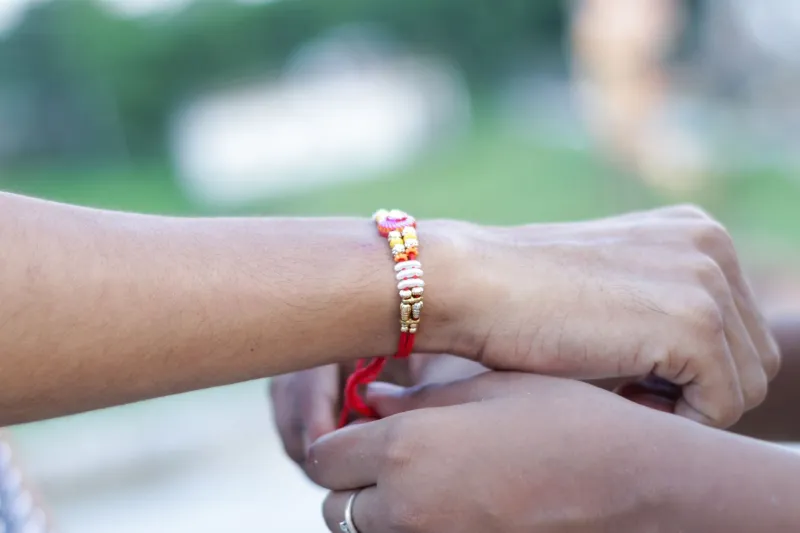
Somewhere between the third and fourth song of a Taylor Swift concert, a girl in a glittery cowboy hat leans over to a complete stranger and offers her wrist. On it: a bracelet spelling out CRUEL SUMMER in tiny pastel beads. The stranger gasps. A trade happens. Two people who will never learn each other's last names walk away with something that feels — inexplicably, embarrassingly — like a memory they'll keep forever.
This is the friendship bracelet industrial complex. And it is absolutely, chaotically, beautifully real.
From Lanyard Hell to Cultural Phenomenon
Let's rewind. For most of its American life, the friendship bracelet lived a humble existence. You made one at sleepaway camp, you knotted it too tight on your best friend's wrist in 1998, and it slowly disintegrated in the shower over the following eight months. Sweet. Forgettable. Gone.
Then something shifted. It's hard to pin down a single moment, but the cultural seismic event most people point to is the Eras Tour — Taylor Swift's record-shattering 2023 concert phenomenon that turned bracelet trading into a full-blown ritual. Fans showed up with hundreds of handmade pieces, trading them with strangers in the crowd like tiny friendship stock exchanges. The practice spread across every city the tour hit, and suddenly the internet was flooded with hauls, trades, tearful reunion stories, and yes, Etsy shops doing genuinely alarming numbers.
But here's the thing: the Eras Tour didn't create the bracelet renaissance. It just turned up the volume on something that had already been quietly humming for years.
The Psychology of the Handmade Thing
Why does a bracelet made of $2 worth of embroidery floss hit harder than a $40 piece of jewelry from a mall kiosk? Psychologists have a few theories, and they're all kind of beautiful.
Handmade objects carry what researchers call "labor love" — the perceived value of something increases dramatically when we know a human being sat down and made it with their actual hands. When someone gives you a bracelet they knotted themselves, you're not receiving a product. You're receiving time. And time, in 2024, is the scarcest resource most people have.
There's also the specificity factor. A bracelet that spells out an inside joke, a song lyric, a nickname only two people use — that's not a gift, it's a coded message. It says I know you specifically. I thought about you specifically. This exists because you exist. Try getting that energy from an Amazon cart.
For Gen Z especially, a generation that grew up drowning in digital everything, physical tokens of connection carry enormous weight. A text is free and instant and can be unsent. A bracelet has to be cut off.
The Makers, the Traders, the Collectors
The friendship bracelet ecosystem has evolved into something with genuine subcultures. You've got your Makers — the people hunched over bead mats at midnight, running color charts in their heads, sourcing specific Miyuki seed beads because the regular ones just don't look right. These are the artists of the movement, and many of them have turned their obsession into real income.
Etsy shops specializing in custom beaded bracelets have exploded. Sellers report waitlists stretching weeks long, custom orders for wedding parties, concert squads, friend groups celebrating everything from college graduations to surviving a particularly brutal situationship. One seller from Ohio told a craft blog she made enough during Eras Tour season to pay off a semester of student loans. From beads. Chaotic. Iconic.
Then there are the Traders — the concert-goers and festival kids who show up loaded down with wrist stacks, ready to swap and collect. Trading has its own unspoken etiquette: you don't lowball someone's handmade piece with a machine-made one, you always honor a trade offer, and if someone's bracelet tells a story, you ask about it. The trading floor is also, quietly, one of the most genuinely wholesome social spaces happening in America right now. Strangers becoming friends over a mutual love of a specific shade of periwinkle. The world is not entirely lost.
And finally: the Collectors. These are the people whose wrists have become archives. Stacked from wrist to elbow, each bracelet holding a memory like a tiny bead-covered journal entry. This one's from my best friend's bachelorette. This one I traded for at a Phoebe Bridgers show. This one my little cousin made me and it's genuinely falling apart but I will never take it off.
The Bracelet as Identity Document
Here's where it gets genuinely interesting from a cultural lens: friendship bracelets have become one of the most efficient shorthand systems for communicating identity that exists right now.
The words spelled out in beads are doing heavy lifting. FOLKLORE. HOT MESS. CHAOTIC GOOD. GIRL DINNER. YOUR MOM. People are using three inches of elastic cord to broadcast their fandoms, their humor, their politics, their entire personality taxonomy. It's a wearable bio. It's a dating profile on your wrist. It's a vibe check you can hold.
And unlike a T-shirt slogan or a tote bag, a bracelet feels intimate. It lives on your body. It bumps against your keyboard when you type. It catches the light when you're driving. It's with you in a way that a poster on your wall simply isn't.
The Weird, Emotional Core of All This
Strip away the Etsy shops and the concert economics and the aesthetic TikToks, and what you're left with is something almost embarrassingly sincere: people want to make things for other people. They want to say I thought about you while I was doing this. They want a physical record of connection in a world that often feels like it's moving too fast to leave any evidence that you were here, that you mattered to someone, that a specific Tuesday afternoon existed and was shared.
A bracelet can't go viral. It can't be screenshot and reposted. It lives on one wrist, in one life, carrying one story.
Maybe that's exactly why it hits so hard.
So if someone offers you their wrist at a concert, at a festival, at a random Tuesday farmers market — trade with them. Ask what the bracelet means. Tell them what yours means. Let a stranger know you for exactly as long as it takes to swap a piece of string.
It's the weirdest, most wonderful thing happening in America right now. And it costs about forty-seven cents to participate.