Peel, Stick, Repeat: Why That Tiny Square of Vinyl Says More About You Than Your Entire Instagram Grid
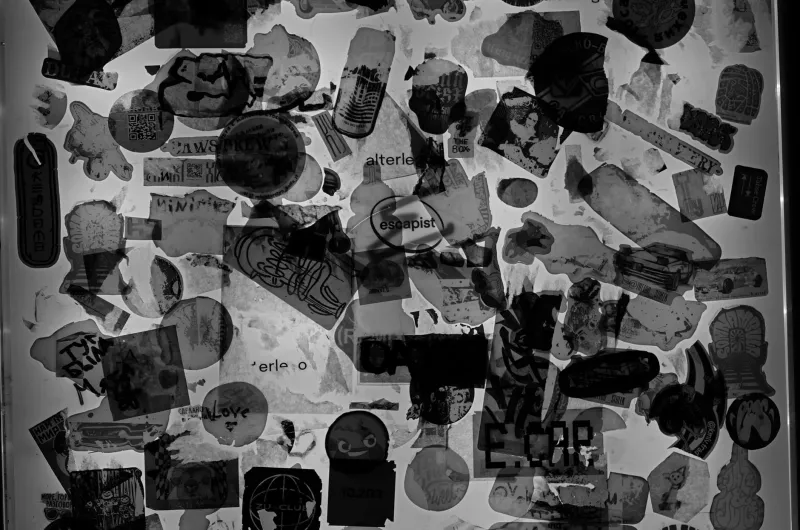
Somewhere between your first Lisa Frank folder and right now, stickers stopped being a kid thing. They became a whole thing. A movement, an economy, a love language, a résumé. Walk into any coffee shop in America and play a quick game: scan the laptops. Within thirty seconds, you'll know exactly who in that room is a cottagecore mushroom girlie, who just got back from a national park, who is deeply, unapologetically obsessed with their cat, and who has strong opinions about oat milk. Nobody had to say a word. The stickers spoke.
And here's the wild part — this tiny, sticky, $3-a-sheet phenomenon has quietly ballooned into a multi-million dollar micro-economy. Indie artists are paying rent with it. Small shops are building entire brand identities around it. Collectors are trading them like Pokémon cards at a swap meet. The sticker is no longer decoration. It's a declaration.
From Gold Stars to Genuine Currency
Let's back up for a second and appreciate the glow-up arc here. Stickers started their American life as a classroom reward system — behave yourself, get a smiley face. Then came the puffy stickers, the scratch-and-sniff stickers, the holographic everything of the '90s that made every Trapper Keeper feel like a portal to another dimension. But somewhere in the early 2010s, something shifted. Artists started printing their own designs. Etsy opened its doors. Redbubble became a thing. Suddenly, a person with a tablet, a dream, and access to a printing service could turn their brain's weirdest output into a 3-inch waterproof vinyl moment that someone across the country would slap onto their Hydro Flask with genuine emotional intention.
Now? The sticker market is a legitimate beast. Analysts have clocked the global custom sticker industry at well over a billion dollars and climbing, with a huge chunk of that energy coming from small US creators selling directly to obsessive fans through platforms like Etsy, Shopify, and their own websites. A single viral design can fund a creator's entire month. A well-timed drop can sell out in hours. This is not a hobby. This is an economy with its own unwritten rules, its own gatekeeping, and its own very serious vibes.
The Unwritten Rules of Sticker Culture (Yes, There Are Rules)
If you're new here, welcome. Please take a seat while we go over a few things.
First: placement is everything. Your water bottle is prime real estate, and the layout matters. You don't just slap things on randomly — you curate. You audition. You live with a sticker face-down on the bottle for a few days, imagining the commitment, before you commit. This is not dramatic. This is responsible.
Second: the laptop is a portfolio. Every sticker on your MacBook is a carefully chosen piece of a mosaic that collectively communicates your entire personality, sense of humor, political leanings, fandoms, and approximate vibe. Strangers will read it like a vision board. You will be perceived. Choose accordingly.
Third: gifting stickers is an act of love. When someone includes a free sticker with an order, it creates a disproportionate amount of joy that has no logical explanation. When a friend hands you a sticker they picked out specifically for you, it means they saw something in the wild and thought that's her. That's intimacy, actually.
Fourth: never, under any circumstances, peel a sticker and then not use it immediately. That is chaos. That is a cursed object now. Figure it out.
The Creators Behind the Craze
The real engine of sticker culture isn't a corporation. It's the 24-year-old illustrator in Chicago making frog designs at midnight. It's the queer artist in Austin selling affirmation stickers that say things that made them feel seen before they could say them out loud. It's the plant mom in Portland whose botanical illustrations started as a personal project and ended up with a waitlist.
What makes stickers such a perfect vehicle for indie creators is the math. The barrier to entry is low — a decent design, a print-on-demand service, and a social media account are genuinely enough to start. But the ceiling? Surprisingly high. Creators with strong aesthetics and engaged communities can build entire brand ecosystems off sticker shops: prints, pins, apparel, zines. The sticker is often the gateway drug. It's the $4 impulse buy that turns someone into a loyal customer, a newsletter subscriber, a person who shows up to your pop-up table at a craft fair with their wallet already open.
And the designs themselves have become a kind of cultural timestamp. You can basically date a vibe by its sticker aesthetic. The mid-2010s gave us minimalist line art and succulents. The early 2020s brought cottagecore mushrooms and mental health affirmations. Right now we're deep in a maximalist, slightly unhinged, intentionally weird era — blobs with faces, unsettling frogs, vegetables with anxiety, phrases that are simultaneously a joke and a cry for help. Art, basically.
Why Peeling That Backing Off Feels Like a Religious Experience
Okay, let's get into the psychology for a second, because there is genuinely something worth examining in how satisfying it is to peel the backing off a sticker. It's tactile. It's decisive. It's a tiny, low-stakes commitment in a world that asks us to make enormous, high-stakes commitments constantly. You're not signing a lease. You're not sending the email. You're just pressing a little piece of art onto a surface and saying: this is who I am right now.
And that impermanence — the fact that stickers can be removed, replaced, layered, and updated — is actually part of the appeal. Your water bottle in 2021 looked different than it does now. Your laptop is a living document. You get to edit yourself in real time, in public, without having to explain anything to anyone. The sticker does the talking.
In a culture obsessed with personal branding but exhausted by the performance of it, stickers offer something genuinely refreshing: a form of expression that costs almost nothing, requires no algorithm, and communicates everything. You don't need followers. You just need a surface and something worth saying.
Stick With It
So the next time you find yourself standing at a craft fair table, holding a sticker up to the light and thinking yes, this one, know that you are participating in something bigger than a purchase. You're voting for an artist with your wallet. You're adding a sentence to the ongoing autobiography you're writing on every flat surface you own. You're joining a culture that has somehow made a piece of vinyl into a handshake, a business card, a love note, and a mirror all at once.
Peel the backing. Press firmly. Smooth out the bubbles.
You've got something to say.