Glowing in the Dark, Together: The Wildly Inventive Ways Americans Are Refusing to Let Distance Win
Let's be honest: the standard long-distance survival kit — a group chat, the occasional FaceTime, and a birthday card that arrives four days late — has never really been enough. It's the emotional equivalent of trying to fill a swimming pool with a soup ladle. Technically you're doing something. But come on.
So what happens when a generation raised on hyper-personalization, DIY culture, and the deeply held belief that vibes are a love language decides they're simply not going to accept mediocre connection? You get friendship lamps that glow across state lines. You get collaborative digital journals that two people write in simultaneously from opposite coasts. You get coordinated 11:11 moments, matching playlists that update in real time, and moon phase check-ins that sound completely unhinged until you realize they're actually working.
Welcome to 2025, where 'being there' has been completely, beautifully reimagined.
The Lamp That Says 'Hey, I'm Thinking About You' Without Saying Anything At All
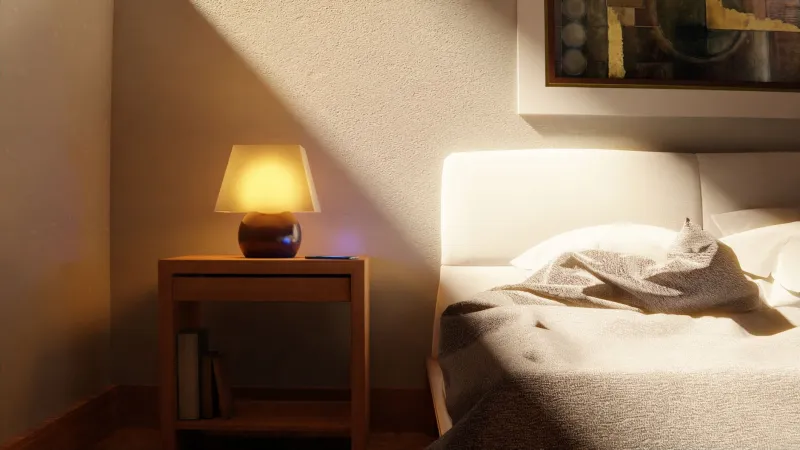
If you haven't heard of friendship lamps yet, prepare to feel a very specific kind of warmth in your chest. Products like the Friendship Lamp by Uncommon Goods and Long Distance Touch Lamps work on a simple but emotionally devastating premise: when you touch yours, theirs glows. That's it. No words. No notification ping. Just light.
For something so low-tech in concept, the psychological weight of it is enormous. It's presence without pressure. It says I thought of you in a way that doesn't demand a response, doesn't interrupt a meeting, and doesn't require anyone to perform happiness on a video call when they're actually just tired and wearing yesterday's hoodie.
Psychologists call this kind of ambient connection a form of passive intimacy — the sense that someone is sharing your emotional space without requiring active engagement. And it turns out humans are starving for it. In an era of constant, high-stakes digital communication, a gentle glow from across the country might be the most radical act of care available.
Digital Journals: Where Oversharing Becomes an Art Form
Apps like Notion, Day One, and the increasingly beloved Rosebud have been quietly repurposed by friend groups and families into something the developers probably didn't entirely anticipate: collaborative emotional archives.
Here's how it typically works. Two people — a college roommate now living in Austin and her best friend back in Columbus, say — share a private journal. They write letters to each other. They paste in screenshots, song lyrics, photos of meals they made, receipts from concerts they wish the other could've attended. Over months, it becomes less like a diary and more like a living, breathing monument to a friendship that refuses to fade.
Some people use Slowly, an app literally designed to simulate old-school pen pal letters — your message takes hours or even days to 'arrive,' depending on how far apart you are geographically. It sounds counterintuitive in an age of instant everything, but the delay creates anticipation. Suddenly a message isn't just a message. It's an event.
The Playlist as Love Letter
Shared playlists have existed since the Spotify collaborative feature dropped, but the ritual has evolved into something far more intentional. The new move isn't just adding songs — it's curating emotional chapters.
Friends are building playlists with unspoken rules: you can only add a song when it reminds you of the other person. Or you alternate — you add one, they add one, back and forth like a musical conversation. Some playlists have a 'current mood' section at the top that gets updated weekly, functioning as a kind of sonic check-in that bypasses the awkwardness of 'so how are you really doing.'
There's something almost alchemical about it. Music bypasses the rational brain and goes straight for the jugular, emotionally speaking. Knowing that your person added that specific Phoebe Bridgers song at 2 AM on a Tuesday communicates more than a paragraph of text ever could.
Synchronized Rituals: The 8 PM Skincare Call, The Sunday Morning Coffee Parallel
One of the most charming long-distance trends gaining traction right now is the parallel activity ritual — where two people do the same thing at the same time, in their own spaces, often on a video call but sometimes just via a coordinated text.
A few examples floating around social media and Reddit threads:
- The Sunday Reset Call: Both people clean their apartments simultaneously on FaceTime. It sounds mundane. It is, in fact, deeply comforting.
- The 8 PM Skincare Sync: Coordinated face mask nights, sometimes with matching products ordered off Amazon so the experience is genuinely identical.
- The Parallel Watch Party: Not a synchronized stream, but both people watching the same movie independently and texting reactions in real time. The delay and chaos are, apparently, the whole point.
- The Moon Check-In: Every new moon, send each other a voice memo about what you're hoping for. Every full moon, report back on how it went. Unscientific? Absolutely. Emotionally resonant? Somehow, yes.
The psychology here is straightforward but profound: shared ritual creates shared identity. When you and your person both know you're making the same tea at the same time, you're not just two people in different cities. You're us.
DIY and the Handmade Gesture That Hits Different
For all the apps and gadgets, there's still an undeniable power in something physical arriving in a mailbox. The difference in 2025 is that the handmade element has gotten weird and wonderful in the best possible way.
People are sending:
- Scent jars — literally a small jar containing the smell of their apartment, their candle, their specific brand of chaos
- Voice memo QR codes printed on cards, so opening a letter also means hearing someone's actual voice
- Pressed flowers or leaves from their local neighborhood, a tiny piece of their geography mailed directly to yours
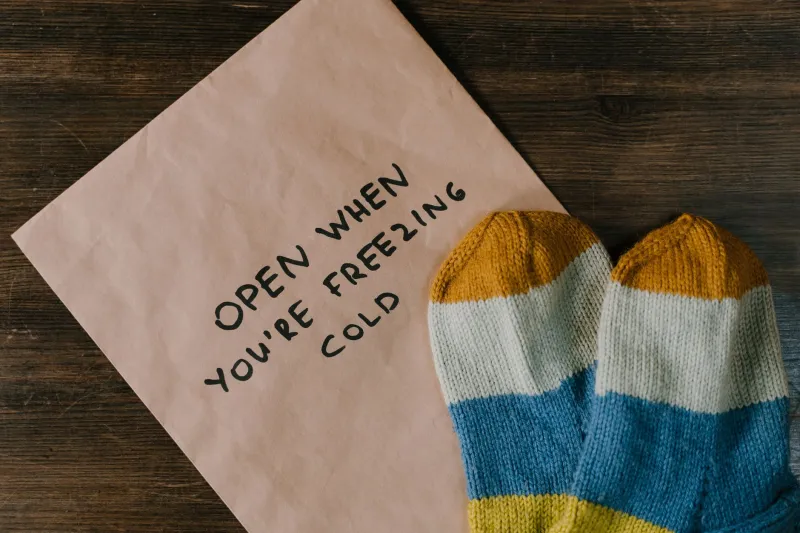
- 'Emergency kits' — a box of their person's favorite snacks, a handwritten list of things to do when feeling low, a dumb inside joke printed on cardstock
None of this is expensive. All of it is irreplaceable.
What We're Really Talking About
Underneath all of it — the glowing lamps, the slow letters, the matching playlists and parallel rituals — is something pretty simple and pretty ancient: the desperate, beautiful human need to say you matter to me and I refuse to let geography be the end of this story.
What's new is the creativity. The refusal to accept that distance means dimming. The insistence on inventing new rituals when the old ones aren't enough.
In 2025, staying close isn't passive. It's an act of imagination. It's a craft project. It's a lamp glowing soft and gold in someone's apartment at 11 PM, telling them — without a single word — that somewhere out there, someone just thought of them.
And honestly? That might be the most creative thing we've made yet.