Mushrooms, Moths, and Moonlight: How Cottagecore Crafting Became the Emotional Language of a Generation
Let's paint a picture. It's 11 PM on a Tuesday. Somewhere in Ohio, a 24-year-old named Wren is hand-painting a mushroom onto a canvas tote bag while a thunderstorm rolls in outside. Her Spotify is playing something that sounds like a lute being played inside a hollow log. She has 47,000 followers on Instagram and a waitlist for her embroidery kits that stretches back three months. She is, by every measurable metric, living her absolute best life — and the centerpiece of that life is a fungus.
Welcome to the cottagecore craft renaissance. Pull up a mossy log.
From Tumblr Mood Board to Legitimate Creative Economy
Cottagecore as a vibe has been floating around the internet since roughly 2018, when Tumblr users started archiving images of dewy meadows, ceramic mugs, and women in linen dresses doing absolutely nothing productive in tall grass. But somewhere around 2020 — when the entire world was locked inside and desperately craving literally any outdoor space — it cracked wide open.
Suddenly, the aesthetic wasn't just something you pinned. It was something you made.
Etsy searches for terms like "mushroom embroidery kit," "moth tote bag," and "botanical cross stitch" exploded. Small indie sellers who'd been quietly listing their forest-themed wares to a handful of buyers suddenly found themselves shipping to all fifty states. TikTok's #cottagecore tag accumulated billions — yes, with a B — of views. What had once been a niche mood board became a fully operational creative economy, complete with its own visual grammar, its own emotional vocabulary, and its own army of incredibly dedicated makers.
The stuff people are creating under this aesthetic umbrella is genuinely stunning. Think hand-embroidered moth wings stitched onto denim jackets. Watercolor tarot cards featuring woodland creatures. Pressed flower resin jewelry. Ceramic mushroom sculptures with little painted faces that look like they know something you don't. The craftsmanship ranges from beginner-level (and proudly so) to jaw-dropping, but the feeling running through all of it is consistent: something slow, something tactile, something deeply, almost aggressively un-digital.
The Creators Who Built Whole Worlds Out of It
Take someone like Fern & Folklore, an indie Etsy shop run by a 26-year-old in rural Vermont who started selling hand-dyed fabric mushroom patches during the pandemic. What began as a hobby to stay sane turned into a full-time business with a devoted community of buyers who don't just purchase — they correspond. They leave reviews that read like letters. They send photos of where they've sewn the patches. They name their mushrooms.
Or consider the TikTok creator who goes by @mosswitch, a self-taught embroiderer in Portland, Oregon, whose slow-motion stitch videos regularly rack up hundreds of thousands of views. She doesn't talk much in them. There's usually ambient forest sound. Sometimes rain. The comments are almost uniformly some variation of "I feel so calm" and "I needed this today." She's turned that peaceful energy into embroidery pattern downloads, a Patreon, and a growing line of kits that she describes — without a trace of irony — as "emotional first aid."
These aren't outliers. They're representatives of an entire creative class that built something real out of a feeling.
So Why Mushrooms? Why Moths? Why This?
Here's where it gets genuinely interesting. The specific iconography of cottagecore crafting isn't random. Mushrooms, moths, ferns, moons, bones, bees, toadstools — these aren't just cute images. They carry weight.
Mushrooms, for instance, have become a kind of shorthand for the entire philosophy: they thrive in the dark, they grow slowly, they're part of systems we can't fully see, and they're way more complex than they look. For a generation that often feels like it's doing its best work underground, unacknowledged, quietly building something — that's a pretty powerful symbol.
Moths get a similar treatment. Unlike butterflies, moths don't get the glamorous press. They're nocturnal, they're drawn to light they can't quite reach, they're considered less pretty. And yet, in cottagecore craft culture, the moth is beloved. Celebrated. Stitched onto literally everything. The message isn't subtle: the weird, night-dwelling, misunderstood creature is worthy of beauty and attention. So are you.
Psychologists who study aesthetics and emotional wellbeing have noted that nature imagery — particularly the kind that suggests slowness, mystery, and organic growth — tends to activate what's called "soft fascination," a gentle, restorative form of attention that counteracts the exhausting demands of screen-heavy modern life. In other words: your brain genuinely needs to look at a hand-painted mushroom sometimes. Science said so.
The Radical Act of Making Something Slowly
Here's the angle that doesn't get talked about enough: in 2025, choosing to spend four hours embroidering a moth onto a jacket you could've bought on Shein for twelve dollars is a political act. Not in a preachy, manifesto-waving way — but in a quiet, deliberate, deeply personal way.
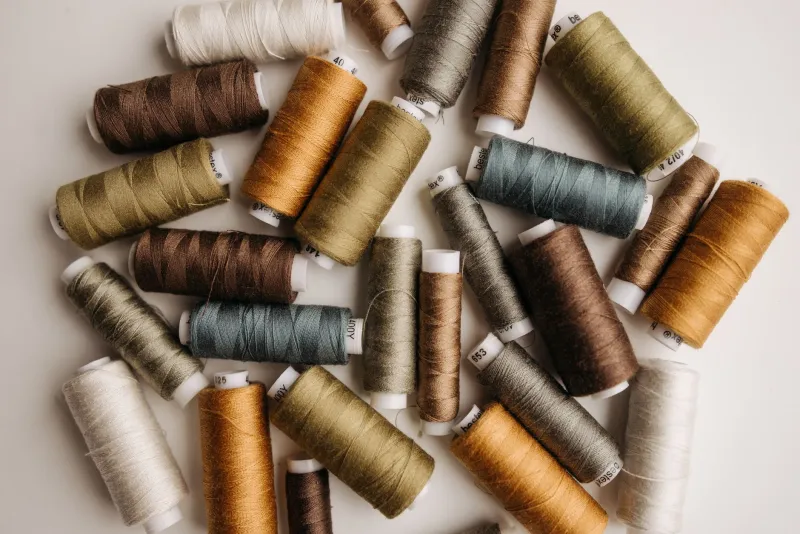
Cottagecore crafting is slow by design. It cannot be rushed. An embroidery hoop doesn't care about your productivity metrics. A hand-painted tote bag will not ship faster because you're stressed. The entire practice is built around a pace that the modern economy actively discourages, and that's exactly what makes it feel so subversive — and so necessary.
Young Americans are increasingly burned out, digitally overstimulated, and financially squeezed in ways that make traditional markers of "making it" feel both distant and hollow. Into that gap, cottagecore crafting has inserted itself as a genuine alternative. Not an escape from reality, exactly — more like a reminder that reality can include moss and embroidery floss and the specific satisfaction of finishing something with your hands.
The Aesthetic Isn't Just Pretty — It's Protective
What's most fascinating about this whole movement is how it functions as emotional infrastructure. The creators who've built communities around it aren't just selling craft supplies. They're selling permission — permission to slow down, to find meaning in small things, to care deeply about a mushroom you painted yourself at midnight while it rained.
In a hyper-digital world that rewards speed, scale, and spectacle, there is something genuinely radical about a generation choosing to speak in the language of ferns and fungi. Something that says: we are not machines, we are not content, we are people who grow in the dark and find that beautiful.
So yeah. The mushroom on the tote bag? It means something. It means a lot, actually.
Now go stitch something weird and wonderful. The forest is waiting.