47 Songs Deep: How Building the Perfect Playlist Became Gen Z's Most Vulnerable Creative Act
47 Songs Deep: How Building the Perfect Playlist Became Gen Z's Most Vulnerable Creative Act
Let's talk about the 2:47 AM activity that nobody admits to but everybody is absolutely doing.
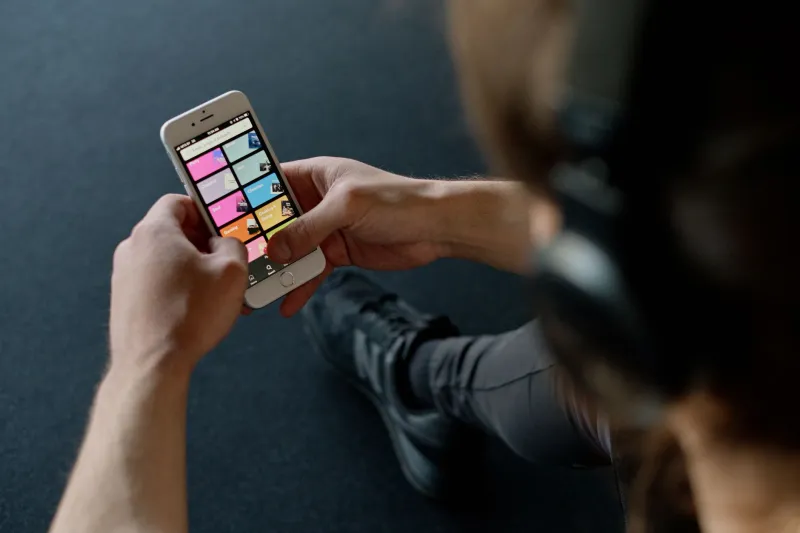
You're not sleeping. You're not doom-scrolling. You're not even doing anything that has a cool name. You are — with the focused intensity of a Renaissance painter deciding where exactly to place the light — dragging songs around in a queue, debating whether that track belongs between those two other tracks, and staring at a custom cover photo you spent forty-five minutes selecting because the vibe has to be right.
The playlist is finished. It has a title that sounds like the first line of a poem you'll never write. You've listened to it exactly once to make sure the sequencing feels correct. And then you share it with approximately three people and pretend it's casual.
It is not casual. It is a self-portrait. And it might be the most honest thing you've ever made.
The Art Form Everyone's Practicing and Nobody's Naming
Here's the thing about playlist-making: it has all the hallmarks of a legitimate creative discipline, but because it lives inside an app and not on a canvas, we keep refusing to call it what it is.
Think about what actually goes into building a serious playlist. There's the curatorial instinct — selecting from thousands of options, narrowing down based on mood, era, texture, emotional temperature. There's the compositional logic — thinking about how songs transition, where the energy peaks, where it needs to breathe. There's the visual design layer — custom cover art, chosen with intention, often edited or collaged to hit a specific aesthetic frequency. And then there's the title, which is doing so much work for such a small piece of text.
"songs for driving home after something you can't explain." That's not a playlist title. That's a short story compressed into nine words.
If someone handed you a physical zine with that title, a hand-selected tracklist, and a carefully chosen cover image, you'd call it art. But because it lives in Spotify, we call it a vibe. We've been underselling this thing enormously.
The Emotional Architecture Nobody Talks About
What makes a playlist genuinely different from a random shuffle — and what makes the best ones feel almost unbearably personal — is the internal logic holding the whole thing together.
Every thoughtful playlist has architecture. There's an opening that establishes the emotional key of the whole experience, like the first sentence of a novel that tells you exactly what kind of story you're in. There's a middle section where things either intensify or drift, depending on what the builder was feeling. And there's an ending that either resolves something or deliberately leaves it open, unfinished, lingering.
Some people build playlists the way directors cut films — thinking about pacing, about when the listener needs relief from tension, about what emotional note they want ringing in the air after the last song fades. They're not doing this consciously, necessarily. They're just following an instinct that something feels wrong if the sequence is off.
That instinct? That's craft.
The Cover Art Is Not an Afterthought (And You Know It)
Let's have an honest conversation about the cover photo.
For a certain type of playlist-maker — and you know who you are — the cover image is not something you slap on at the end. It is a deliberate, sometimes agonizing choice that has to visually capture something the title and the songs can only gesture toward.
People are pulling screenshots from obscure films. They're using their own photography. They're making collages in Canva or PicsArt that layer textures and colors in ways that are genuinely, legitimately beautiful. Some are going full graphic design, choosing typography and color palettes that coordinate across their entire Spotify profile like a cohesive brand identity.
This is visual art. It is happening inside a music streaming platform, which is maybe the most Bambitsol thing imaginable — creative expression colonizing whatever space is available, refusing to wait for a proper venue.
The result is that some people's Spotify profiles look like curated gallery walls. Every playlist cover a different panel of the same ongoing self-portrait.
Sharing Is the Terrifying Part
Here's where it gets genuinely vulnerable: sending someone your playlist.
Not a playlist. Your playlist. The one with the weird title and the sequencing you spent actual time on and the cover photo that means something specific to you. Sharing that is an act of exposure that most people would never describe out loud but absolutely feel in their chest.
Because a playlist reveals things. It reveals what you actually listen to when nobody's watching, not just what you'd admit to. It reveals your emotional range — whether you lean into sadness or use music to climb out of it. It reveals your references, your nostalgia, your current obsessions. It reveals, sometimes painfully clearly, exactly where you are emotionally right now.
Album covers are someone else's art. Concert merch is a souvenir. A playlist is something you built, sequenced, and titled yourself. Handing it to someone is closer to handing them your journal than it is to recommending a restaurant.
No wonder people get weird about it.
Why This Is Happening Now
This level of playlist obsession isn't random — it's a direct response to the creative conditions Gen Z grew up in.
When every possible type of content is available at all times, curation becomes the skill. Anyone can find a song. Not everyone can build a 47-song sequence that takes a listener on a coherent emotional journey that somehow ends on exactly the right note. The scarcity isn't in the music anymore. It's in the taste, the judgment, the particular human sensibility that knows which song goes where and why.
Playlists are also one of the last genuinely personal creative acts that doesn't require an audience to validate it. You can make a playlist for yourself, title it something nobody else will ever read, and it still counts. It still means something. In a content landscape that increasingly feels like everything is being made for engagement metrics, there's something quietly radical about an art form that works just as well in total privacy.
The Portrait Hanging in the Cloud
Somewhere right now, someone in the US is arranging songs with the same seriousness that a photographer brings to a darkroom. They're thinking about light and shadow, about tension and release, about what the whole thing says when you step back and look at it all at once.
They'll probably never call it art. They'll send it to a friend with a single text that says "made this, thought of you" and leave it at that.
But it is art. It's a portrait of a specific person at a specific moment, built out of other people's music and arranged into something entirely their own. It's weird, it's intimate, it's creative in ways that don't fit neatly into any category — which honestly makes it perfect.
That's the playlist. That's the portrait. And it's been hanging in the cloud this whole time, waiting for someone to finally look at it properly.