Chaos Theory, Cashmere, and the Sacred Art of Finding Everything at Goodwill
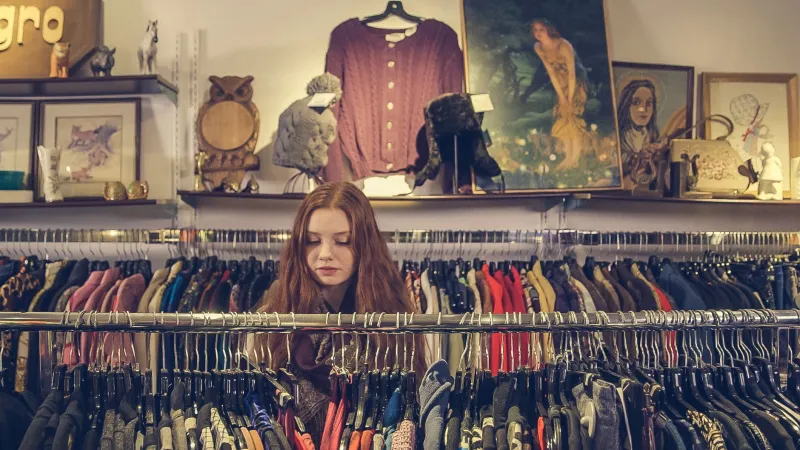
Let's get one thing straight: thrifting is not a casual activity. It is not a quirky little hobby you pick up because a TikTok made it look cute. It is a discipline. A calling. A full-body, sensory-overload, mildly-spiritual experience that will have you elbow-deep in a bin of scratchy sweaters at 9 a.m. on a Tuesday, absolutely convinced that your life's purpose lives somewhere in the XL section.
The people who thrift well — the ones who walk out with a $4 silk blouse and a vintage Levi's trucker jacket while you're standing there holding a mismatched ceramic rooster — aren't just lucky. They've developed a system. A whole philosophy, actually. And it's time we talked about it.
The Mindset Comes First (No, Really)
The biggest mistake first-timers make is walking into a Goodwill or Savers with a specific item in mind. I need a blazer. I need a cute going-out top. That energy will betray you every single time. The thrift store is not a mall. It does not care about your vision board.
The seasoned thrifter enters with what can only be described as open-eyed chaos mode — a relaxed, wide-open awareness that lets you absorb everything on a rack without fixating on any one thing. Think of it less like shopping and more like wandering through a museum where every piece has a price tag and someone's grandmother once wore it to a dinner party in 1987.
The goal isn't to find what you want. It's to discover what you didn't know you needed.
Touch Everything (Seriously, Everything)
Here's the thing they don't teach you in any guide: your hands know things your eyes don't. The texture of a fabric tells you its entire life story in about two seconds. Run your fingers along a rack and let your palms do the filtering.
Real silk has a cool, almost liquid feel. Quality wool has weight and a slight resistance. Polyester from the bargain bin feels like touching a grocery bag that's been left in a hot car. Once you train your hands to know the difference, you'll stop pulling things off hangers just because they look cute from three feet away.
Also: check the seams. Check the armpits (yes, really). Flip the collar. A well-made garment with a small fixable flaw — a missing button, a loose hem — is a treasure. A cheap garment in perfect condition is still a cheap garment.
The Timing Is a Whole Strategy
Most people show up on weekends. That's adorable. That's also why they're fighting over the same rack with forty other people who watched the same thrift-flip video.
The real move? Weekday mornings. Tuesday and Wednesday specifically. Most thrift stores do their restocking and sorting over the weekend, which means by Monday and Tuesday, fresh donations are hitting the floor. You want to be there when the cart of unsorted goods rolls out. You want to be the first eyes on it.
Also worth noting: estate sale donation windows. When someone clears out a house — particularly in older, established neighborhoods — the resulting donations are often extraordinary. Whole wardrobes from people who bought quality and kept things for decades. This is where the vintage Pendleton shirts live. This is where the real cashmere hides.
Learn the Language of Labels
Vintage label literacy is genuinely one of the most underrated skills in the thrifting world. Knowing that a certain tag style means a garment is from a specific decade can completely change how you price-assess a find. A Liz Claiborne piece from the early '80s is a completely different animal than one from 2003. A Made in USA label on denim is a signal worth pausing for.
You don't need a PhD in fashion history. You just need a phone and fifteen minutes of Googling. Start with the brands you love and work backward through their label history. It becomes genuinely addictive — like a treasure map written in helvetica and union labels.
The Rejection of Fast Fashion as a Creative Act
Here's where it gets a little philosophical, because thrifting — when you really lean into it — is an act of rebellion that goes beyond just saving money.
Every piece you pull from a secondhand rack is one you didn't buy new. It's a quiet, stubborn refusal to participate in a system that churns out trend cycles every six weeks and expects you to keep up. It's a vote for the idea that your personal style shouldn't have an expiration date dictated by a corporation.
And there's something almost artistic about building an identity out of fragments — a '70s suede jacket here, a hand-embroidered blouse there, a pair of perfectly broken-in Levi's that fit like they were made for you specifically. You become a curator of your own visual story, and none of it looks like anyone else's because it can't. It's genuinely one of a kind.
The Patience Is the Point
Some days you leave with a bag full of treasures. Some days you leave with nothing but the vague smell of cedar and mild disappointment. Both trips matter.
The empty-handed visits are training. They're teaching your eye to be more discerning, your hands to be faster, your instincts to sharpen. Every rack you flip through without buying anything is a rack that calibrated your taste just a little more precisely.
The hunt is the art form. The jacket is almost secondary.
Almost.
Now go touch some sweaters.