Lumpy, Lopsided, and Absolutely Selling Out: The Ugly-Pretty Craft Revolution Nobody Saw Coming
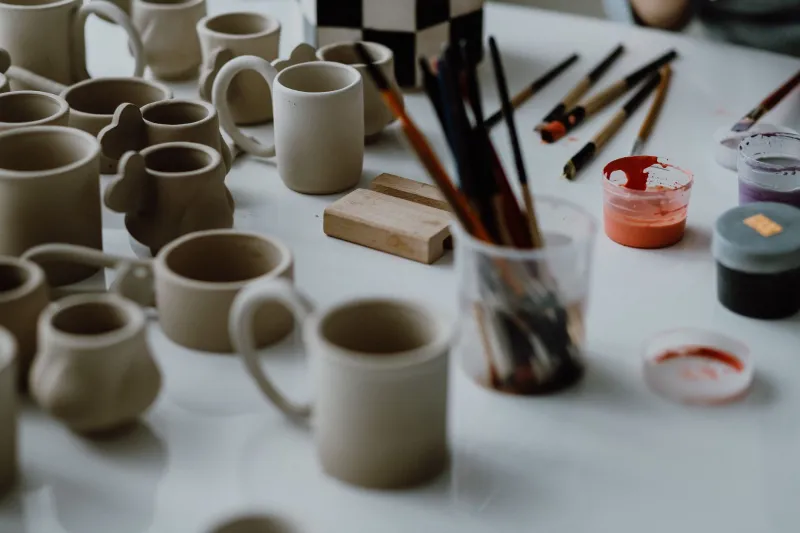
Somewhere in a tiny apartment in Portland, a twenty-three-year-old is pulling a ceramic mug out of a kiln and absolutely beaming at it. The handle is slightly too big. The glaze dripped in a direction it was not supposed to drip. There is a fingerprint baked permanently into the side like a tiny fossilized crime scene. She lists it on Etsy for $34 and it sells in eleven minutes.
This is not an accident. This is a movement.
Across the United States, a glorious wave of intentionally imperfect handmade goods is crashing through craft markets, TikTok feeds, and independent online shops — and the people making them are not apologizing for a single wobbly edge. They are charging appropriately for it.
What Even Is 'Ugly-Pretty' and Why Does It Slap So Hard?
The term sounds like a contradiction, and that is precisely the point. Ugly-pretty crafts exist in the delicious tension between something that technically should not work and somehow completely does. Think lumpen clay bowls with uneven rims that catch the morning light in a way a factory mold never could. Think cloud paintings executed in oil pastel where the clouds look less like cumulus formations and more like someone sneezed creativity onto a canvas. Think cottagecore candles poured into secondhand teacups, the wax slightly off-center, the wick leaning with the confidence of a person who does not care what you think.
The aesthetic owes a debt to wabi-sabi, the Japanese philosophy of finding beauty in impermanence and imperfection, but it has been thoroughly Americanized — louder, funnier, and aggressively monetized in the best possible way. Where wabi-sabi is quiet and meditative, the ugly-pretty craft movement is a group chat that will not stop sending voice memos.
The Creators Who Decided Perfection Was Boring
Meet the people actually doing this. They are not art school dropouts nursing grudges against technique. Many of them know exactly what the rules are — they just find the rules exhausting.
Creators like Dani, a self-taught ceramicist in Austin who started making pottery during a particularly bleak pandemic winter, describe the shift as almost accidental. 'I kept trying to make these smooth, even pieces I saw in tutorials,' she explains, 'and mine kept coming out looking like they had opinions. One day I just stopped fighting it. I posted a video of my most chaotic mug and said something like, she is ugly but she is mine. It got forty thousand views overnight.'
That video launched a following. Now Dani's shop has a waitlist.
Or consider Marcus, a Chicago-based painter who works almost exclusively in smudgy oil pastels and deliberately refuses to blend colors fully. His canvases look like a thunderstorm trying to become a landscape and not quite getting there. He posts process videos where he narrates his choices with the casual authority of someone who has fully committed to the bit. 'People kept commenting like, this looks like a child made it, and I started replying, yes, a child with excellent taste.' His prints now ship to thirty-two states.
The Therapy Angle (Yes, There Is One)
Here is the part where things get a little unexpectedly sincere, because the ugly-pretty movement is not just aesthetically interesting — it is doing something genuinely useful for a generation that grew up being algorithmically compared to everyone else at all times.
Perfectionism has a body count, metaphorically speaking. Countless people abandoned creative hobbies because they could not immediately produce results that looked like what they saw online. The pressure to be good before you even begin is one of the quieter cruelties of the social media era.
Imperfection-as-identity short-circuits that entirely. When the whole point is that your clay pot looks a little drunk, you cannot fail. You can only succeed more chaotically than you planned. Pottery studios across the country have reported massive increases in beginner enrollment, with instructors noting that students seem less anxious than they used to be. 'They come in and they want to make something weird on purpose,' one studio owner in Denver noted. 'That energy is so different from five years ago. It's genuinely more fun.'
Mental health practitioners have been quietly nodding at all of this. The act of making something with your hands — regardless of outcome — is well-documented as anxiety-reducing. But adding explicit permission to be imperfect removes the last barrier. You do not have to be good. You just have to make the thing.
Etsy, TikTok, and the Economics of the Beautiful Mess
Let's talk money, because this is not just a vibe — it is a legitimate economic phenomenon.
Etsy searches for terms like 'handmade imperfect ceramics,' 'rustic mismatched mugs,' and 'wonky pottery' have surged consistently over the past two years. Sellers who lean into the ugly-pretty aesthetic often report that their most visibly imperfect pieces sell fastest, sometimes at premium prices, because buyers understand they are getting something genuinely one-of-a-kind. You cannot mass-produce a fingerprint in a glaze. You cannot replicate the exact way Marcus's pastels smeared on a humid Chicago afternoon in October.
TikTok has functioned as the movement's primary engine, because the platform rewards personality over polish in a way that Instagram historically has not. A video of someone pulling a wildly misshapen pot out of a kiln and losing their mind laughing about it performs enormously well. The comments fill up with people saying 'I would actually buy that' and then, crucially, buying it when the shop link appears.
The community aspect matters too. Ugly-pretty creators tend to be wildly supportive of each other in comment sections, sharing techniques for achieving specific kinds of wonderful wrongness — how to get that particular drippy glaze effect, how to make oil pastel clouds look suitably chaotic, how to pour a candle so the wax settles just unevenly enough to look intentional without looking like a mistake. It is a community built around the shared rejection of a standard, and that is a genuinely powerful thing to be part of.
So Should You Make a Lopsided Mug Right Now?
Absolutely yes. Immediately. Do not wait.
The barrier to entry for this movement is almost insultingly low, which is part of its genius. Air-dry clay costs less than a movie ticket. Oil pastels come in sets at every craft store in America. Candle wax and secondhand teacups are a thrift store trip and twenty minutes away from becoming something you could genuinely sell.
You do not need a studio. You do not need a degree. You do not need to know what you are doing. You need the willingness to make something, look at it with its flaws fully visible, and decide that those flaws are the whole point.
America has spent a long time being sold the idea that handmade things should look as close to machine-made as possible. The ugly-pretty movement is the extremely loud, slightly lopsided, absolutely thriving rejection of that premise.
Your mug does not need to be perfect. It needs to be yours. And apparently, someone out there will pay thirty-four dollars for it before you even finish the listing description.
Get out there and make something gloriously wrong.