Glue Sticks, Guts, and Glory: Why the Chaotic New Scrapbook Is the Realest Thing Gen Z Has Ever Made
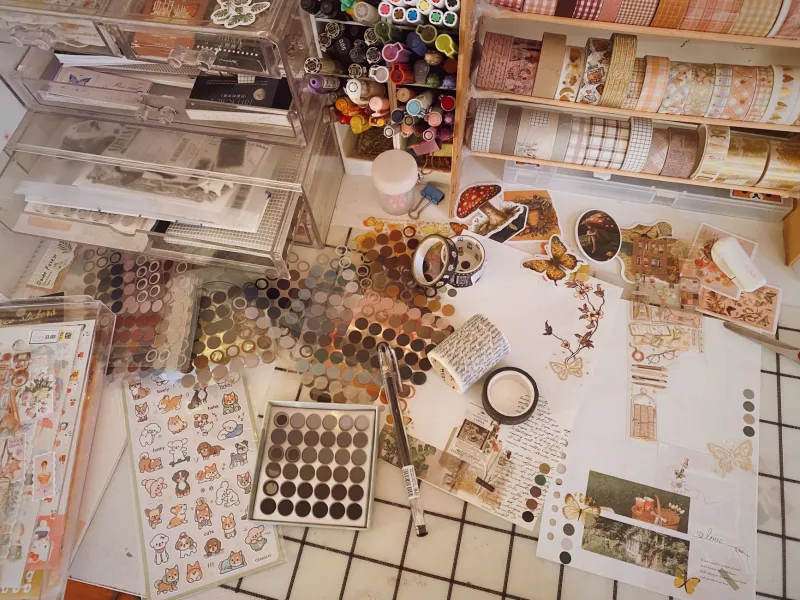
Somewhere between a Taco Bell receipt, a dried flower petal, and a lyric from a song you heard at 2 AM, something genuinely magical is happening. Not on your phone. Not in a cloud storage folder. On actual paper, with actual glue, in a physical book that smells faintly of rubber cement and ambition.
Scrapbooking is back. And it brought chaos with it.
This isn't the craft-room era your aunt presided over — the one with the acid-free cardstock, the corner-rounding punch, and the matching ribbon spools organized by color. No shade to that genre of scrapbook, but the new movement looks nothing like it. Today's version is layered, messy, overlapping, and wildly personal. It's a Polaroid of your best friend next to a fortune cookie slip next to a hand-scrawled inside joke next to a magazine cutout of a cloud that looked like how you felt that Tuesday. It's a visual scream. And it is so much better.
The Anti-Algorithm Art Form Nobody Asked For (But Everyone Needed)
Here's the thing about social media memory-keeping: it flattens everything. The Instagram carousel, the TikTok photo dump, the Pinterest board — they're all beautiful, curated, and completely incapable of holding the full, weird, contradictory texture of an actual human experience. The algorithm rewards aesthetics. The scrapbook rewards truth.
When you physically glue a movie ticket stub from a date that went sideways next to a napkin doodle you made while processing it afterward, you're creating something no app can replicate. The physical proximity of objects carries emotional weight. The wrinkled edges matter. The coffee stain on the corner is part of the story.
Gen Z — a generation that grew up entirely inside screens — is increasingly hungry for things that exist outside of them. Not because they're anti-tech (they're not, they're literally posting their scrapbooks on TikTok), but because the tactile experience of making something with your hands scratches an itch that no amount of scrolling ever will.
What Actually Goes Into One of These Things
Ask anyone deep in the scrapbooking rabbit hole and you'll get a wildly different answer, which is kind of the whole point. But there are some recurring ingredients in the chaos:
Washi tape as punctuation. Not decoration, not border — punctuation. A strip of washi tape across a photo says "this moment mattered" in a way that a digital filter simply cannot.
Found paper ephemera. Fast food bags. Concert wristbands. Sticky notes. Bus tickets. The physical debris of living your life is the raw material here. Nothing is too small or too weird. The Dunkin' receipt from the morning you got good news? That's going in.
Magazine and newspaper cutouts. The old-school collage tradition, very much alive. A word cut from a headline. An eye from a perfume ad. A color swatch that matched your mood on a specific afternoon. It's part visual diary, part ransom note, and entirely yours.
Handwriting. Not typed, not printed. Handwriting. The slightly uneven letters, the crossed-out word, the margin doodle — your handwriting is a fingerprint. It makes the page undeniably, irrevocably you.
Layers on layers on layers. The real signature move of the current scrapbook era is depth. Things overlap. Photos are partially hidden. You have to peel back a taped flap to read the note underneath. The book becomes an experience, not just an object.
The Communities Making It Happen
If you haven't yet fallen into the scrapbooking corner of TikTok, BookTok, or even good old YouTube, brace yourself — it's enormous and extremely wholesome. Creators are doing "scrapbook with me" videos that rack up millions of views, not because they're showing off perfect results, but because watching someone make something real in real time is genuinely compelling content.
On Reddit, communities dedicated to paper crafts and memory-keeping are thriving, full of people sharing spreads that range from color-coordinated and serene to absolutely unhinged visual explosions. Both are celebrated. Neither is wrong. The culture is remarkably accepting of different approaches, which — in the current internet landscape — feels almost radical.
Craft stores like Michaels and Hobby Lobby have quietly become Gen Z hangout spots. The scrapbooking aisle, once the domain of a very specific suburban demographic, is now populated by twenty-somethings in band tees loading their baskets with specialty tape and cardstock. Target's seasonal craft sections sell out of certain washi tape collections within days of restocking.
This is a movement with purchasing power and serious emotional investment.
Why Your Brain Actually Loves This
There's a reason putting physical things on paper hits different than making a digital collage. Psychologists who study memory and creativity have long noted that the act of physically handling objects associated with memories reinforces those memories more deeply than passive digital interaction. When you're tearing, gluing, layering, and writing by hand, you're engaging multiple sensory pathways at once. You're not just recording a memory — you're processing it.
For a generation navigating anxiety, identity formation, and an overwhelming digital information landscape, that kind of embodied, focused creative work functions almost like meditation. You can't doomscroll and scrapbook at the same time. The scrapbook demands your full, present, analog attention, and it gives back in proportion to what you bring.
There's also something quietly powerful about creating an artifact. Your scrapbook will exist in ten years. It won't be locked behind a platform that pivoted or an app that got discontinued. It won't require a password or a subscription. It'll just be there, smelling like old paper and holding the exact shape of who you were.
The Rebellion Hidden in the Craft Room
Calling scrapbooking an "anti-algorithm act" sounds dramatic until you think about what the algorithm actually wants from you: consistent, polished, engagement-optimized content that performs well and keeps you producing more. The scrapbook wants none of that. It doesn't care if it's shareable. It doesn't need likes. It exists entirely outside the economy of attention.
Making one is, in a small but genuinely meaningful way, a refusal. A refusal to let your memories exist only as data. A refusal to let your story be told only in formats a platform approves of. A refusal to be tidy and optimized when your actual life is, gloriously, neither of those things.
The chaos of the new scrapbook isn't a bug. It's the whole point.
So dig out that shoebox of ticket stubs. Grab the washi tape. Find a magazine from three years ago and start tearing. Your story is messier and weirder and more layered than any grid could hold — and that, truly, is something worth celebrating with a glue stick.