Shattered, Tangled, and Somehow More Beautiful: Why Gen Z Is Hoarding Broken Jewelry Like It's Sacred
Somewhere between the third tangled necklace and the earring whose partner vanished into the void, most people give up. They toss the whole mess into a drawer, forget about it for two years, and eventually throw it away during a cleaning spiral fueled by a podcast about minimalism.
Gen Z? They frame it.
Across America, young people are doing something genuinely wild with their broken, bent, and beyond-repair accessories — they're turning them into art. Not in a vague, metaphorical way. In a literal, hang-it-on-your-wall, charge-for-it-on-Etsy way. And the reasons why are way more interesting than the jewelry itself.
The Junk Drawer Becomes a Gallery
Let's set the scene. You've got a gold-plated ring that snapped in half during a concert. A beaded bracelet that disintegrated in the ocean. A charm necklace with exactly two charms left and zero structural integrity. In previous generations, these were casualties. Stuff that didn't make the cut.
But something shifted. Maybe it was the rise of wabi-sabi aesthetics creeping into American design culture. Maybe it was the environmental guilt of throwing yet another thing into a landfill. Maybe it was just the deeply Gen Z instinct to refuse to let anything be just trash.
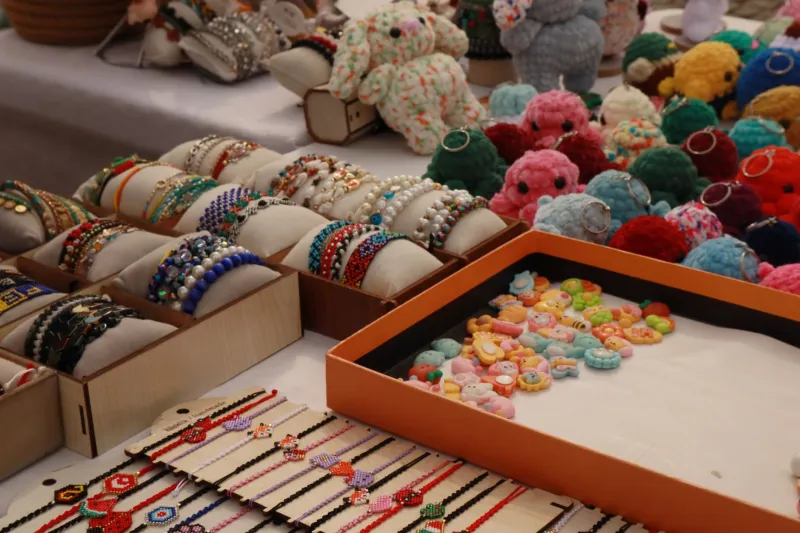
Whatever sparked it, the result is a full-blown movement. Tangled necklaces are getting mounted on canvas boards, their knots preserved like archaeological specimens. Bent rings are being threaded onto wire and shaped into tiny plant hangers for succulent shelves. Broken chains are wound around driftwood, picture frames, even old mirrors. The effect is somewhere between maximalist jewelry display and deeply personal time capsule.
"It's like scrapbooking but make it dimensional," said one creator on TikTok whose broken jewelry wall installation has been viewed over two million times. The comments are full of people who suddenly remembered their own junk drawers with new eyes.
Broken Isn't the End of the Story
Here's the philosophy that makes this trend genuinely compelling rather than just aesthetically interesting: for Gen Z, broken doesn't mean finished. It means starting point.
There's a deeply intentional storytelling element to what these creators are making. That snapped necklace isn't just a snapped necklace — it's the one you wore every single day for three years until it finally gave out. That bent ring is from a trip, or a person, or a version of yourself you're not entirely sure you miss but definitely don't want to forget.
Transforming these pieces into art is a way of saying: this mattered, and I'm not going to pretend it didn't by throwing it in a bin. It's grief processed through glue guns. It's nostalgia made tactile. It's also, frankly, incredibly beautiful.
Designers and artists who've leaned into this aesthetic talk about the concept of kintsugi — the Japanese art of repairing broken pottery with gold, treating the damage as part of the object's history rather than a flaw to hide. Gen Z didn't invent that philosophy, but they've absolutely claimed it, remixed it, and posted it to Pinterest in eighteen different color palettes.
The Environmental Angle Nobody's Ignoring
Let's talk about the elephant — or rather, the mountain of discarded fast-fashion jewelry — in the room.
The accessories industry has a serious waste problem. Cheap jewelry breaks fast. It tarnishes. The backs fall off. And because it cost $4 at a checkout counter, there's almost no cultural script for what to do with it when it breaks except throw it away.
Gen Z is writing a new script. Keeping and repurposing broken jewelry is, at its core, a refusal to participate in a throwaway cycle. It's small-scale, personal-level sustainability that doesn't require a lecture or a lifestyle overhaul — just a decision to look at something broken and ask what else could this be?
The fact that the answer also turns out to be "something gorgeous" is, genuinely, the best possible outcome.
Some creators are going further, collecting broken pieces from friends and family and turning them into collaborative art projects. Grandma's busted brooch next to a best friend's broken locket next to a thrifted chain that's seen better days — suddenly you have a wall piece that's also a family portrait, a friendship map, a visual autobiography.
How to Start Your Own Glitter Graveyard
If you're now staring at your junk drawer with entirely new energy, here's how people are actually doing this:
Shadowbox installations are probably the most accessible entry point. Grab a deep-frame shadowbox from a craft store, arrange your broken pieces inside like a collection, and hang it. Done. It looks intentional because it is intentional.
Wire wrapping is having a serious moment. Broken chain segments, single earrings, and bent rings can all be wrapped onto thick wire that's been shaped into letters, numbers, or abstract forms. The result looks custom and considered.
Resin casting takes things to another level entirely. Broken pieces suspended in clear resin become pendants, coasters, or wall art — frozen in a new context, made permanent in a way they never were before.
Textile integration is exactly what it sounds like: sewing or hot-gluing broken jewelry pieces onto fabric — denim jackets, tote bags, pillow covers — where they become embellishment rather than accessory.
None of these require significant skill, significant money, or significant time. They just require the willingness to look at something broken and see possibility instead of failure.
The Deeper Meaning (There's Always a Deeper Meaning)
What this trend ultimately reveals is something worth sitting with: Gen Z is extraordinarily good at finding meaning in the things other people discard. Whether it's thrifted clothes, vintage aesthetics, or busted jewelry, there's a consistent throughline of I see value here that the world has written off.
That's not just a creative instinct. It's a worldview. And it's making some genuinely stunning art in the process.
So the next time something snaps, tangles, or loses its back, maybe don't throw it away. Maybe ask what it wants to become next. Your junk drawer might just be a gallery waiting to happen.