Half-Finished and Completely Okay: The Beautiful Disaster of Gen Z's Creative Graveyard
Somewhere in America, there is a ukulele under a bed. It has four strings, a tiny crack near the tuning peg, and exactly three YouTube tutorial tabs still open on a laptop nearby. Next to the laptop: a sketchbook with twelve pages of really promising character designs and then nothing. Behind the sketchbook: a Procreate app with seventeen untitled drafts. Behind that, spiritually speaking: a Spotify playlist called "music production inspo" that has never once been used for actual music production.
This is not a failure. This is an aesthetic.
Gen Z has quietly, cheerfully, and with absolutely zero apology constructed an entire creative identity around the beginning of things. The purchase. The setup. The first chaotic attempt. The vibe of possibility. And then — beautifully, deliberately, unapologetically — the move onto the next thing.
The Psychology of the Eternal Start
Here's what nobody tells you about dopamine: it peaks hardest at anticipation, not arrival. Neuroscience has known this for decades. Gen Z, apparently, figured it out empirically through sheer volume of abandoned Skillshare subscriptions.
Jordan, 22, from Austin, Texas, currently has what she describes as "a rotating roster" of creative hobbies. Watercolor painting, polymer clay earring-making, hand-lettering, and — most recently — risograph printing, which she learned about at 2 a.m. and immediately decided was her entire personality.
"I think I've finished maybe four things in the last two years," she says, completely unbothered. "But I've started like fifty. And honestly? The starting is the best part. It's when everything still feels possible."
This isn't laziness. Psychologists who study intrinsic motivation have a term for it: exploratory creativity. It's the mode where the brain is most active, most lit up, most genuinely alive. Completion, by contrast, requires a different cognitive gear — one that involves discipline, tolerance for imperfection, and the willingness to declare something done, which means declaring it finite, which means letting go of all the ways it could still be better.
For a generation raised on infinite scroll and endless content, finitude is genuinely uncomfortable.
The Aesthetic of Creative Chaos
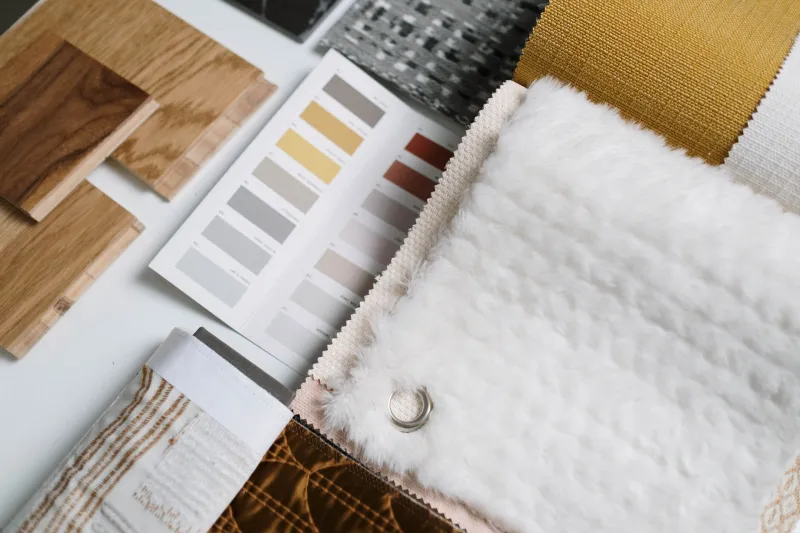
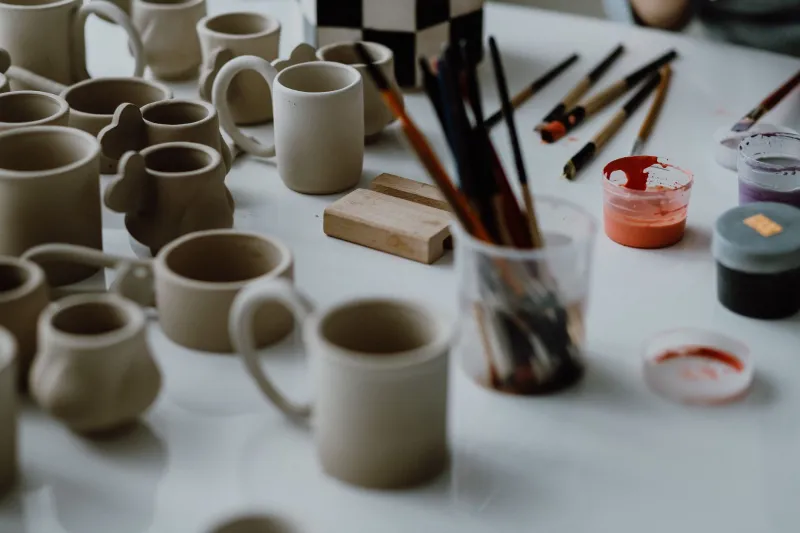
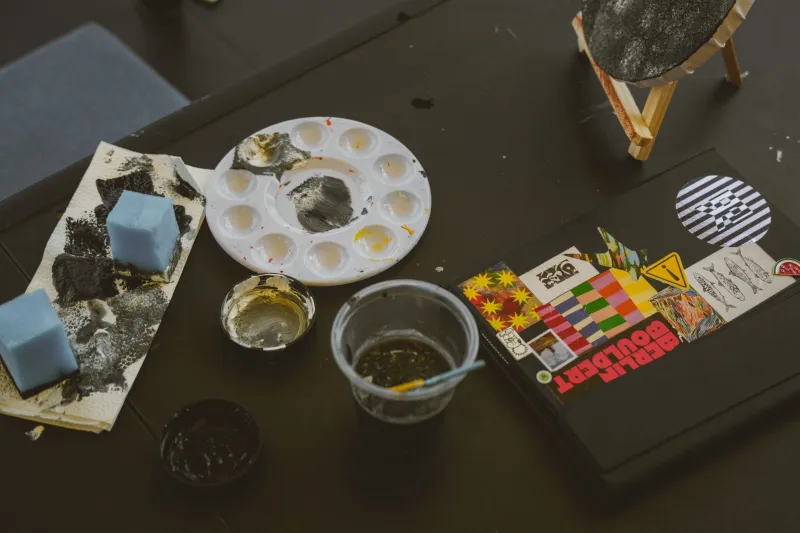
Walk into any Gen Z creative's space and you will find what can only be described as a museum of good intentions. Half-used tubes of acrylic paint. A ring loom with six rows of a bracelet that stopped mid-pattern. A film camera with twelve exposures left on a roll that will probably never be developed. A crochet project that got complicated around row eight and has been "on pause" since March.
And here's the thing — it's gorgeous. There's a specific visual language to creative chaos that is genuinely compelling. The layered mess of materials signals a mind that is constantly reaching, constantly curious, constantly willing to try something new and weird and potentially embarrassing.
Marcus, 24, from Portland, keeps what he calls his "graveyard shelf" — a dedicated bookcase where every abandoned project lives in full view. There's a half-assembled synthesizer kit, a zine that got to page four, two knitting projects in different stages of confusion, and a model kit of a 1967 Mustang that is missing its left door.
"People come over and they always want to talk about the shelf," he says. "It's like, those things tell you more about me than anything I've actually finished. They show you everything I wanted to try. Everything I got excited about. That's real."
He's not wrong. There's an argument — a genuinely compelling one — that the attempt is the most honest creative document a person can produce. A finished piece has been edited, refined, curated. An abandoned one caught you mid-thought, mid-feeling, mid-becoming.
'Unfinished' as a Valid Art Form
The art world has known this forever. Michelangelo's Prisoners — a series of sculptures left deliberately (or not) half-emerged from raw marble — are considered some of his most emotionally powerful works. Schubert's Unfinished Symphony is one of the most performed pieces in classical music. Da Vinci's notebooks are more famous than half his paintings.
The unfinished thing has always carried a specific kind of magic: the sense of process frozen in time, of catching the maker in the act of making.
Gen Z is just doing this at scale. Democratizing the aesthetic of the incomplete. Refusing to be embarrassed by the middle.
There are entire TikTok corners dedicated to showing off abandoned projects without shame — "project graveyard" content that regularly racks up millions of views because people recognize themselves instantly. Comments flood in: this is my entire apartment, I have the exact same unfinished macramé, wait are we the same person.
The collective recognition is the point. The mess is the community.
Why Finishing Feels Like Losing
Ask any perpetual starter why they don't finish things and you'll get some version of the same answer: finishing means it's real. And real things can be judged.
The half-finished painting on your easel is still, technically, a painting you're working on. The moment it's done, it becomes a painting that is, and paintings that are can be looked at critically, compared to other paintings, found lacking.
Starting is safe. Starting is brave without the consequences.
Sophia, 21, from Chicago, makes a good point: "I think I'm also just genuinely interested in too many things. I don't think that's a problem. I think that's just who I am. Why would I force myself to become a pottery person when I also want to be a bookbinding person and a film photography person?"
Why indeed.
The Gentle Reframe
Here's what Bambitsol wants to officially propose: stop calling it quitting. Call it sampling. Call it creative field research. Call it building the most eclectic, chaotic, genuinely interesting inner life that a person can construct in the span of a few years.
Every abandoned project taught you something — a new vocabulary, a new way of seeing, a new respect for people who actually do finish things. Every half-used sketchbook is a timestamp of who you were when you bought it and what you wanted to become.
That's not a failure. That's a document.
The ukulele under the bed isn't a symbol of giving up. It's a symbol of a person who once heard a song and thought, I want to make something like that. That impulse — that reaching — is the most human thing there is.
Finish things if you want to. Or don't. Either way, the graveyard shelf is kind of beautiful.